Political campaigning is the organized effort to win support from enough voters to win an election. The election might fill an office such as mayor, senator or school board member, or it might decide a ballot measure, where voters approve or reject a proposed law directly. Every campaign, whatever its side, works with the same basic set of tools.
This article walks through those tools in plain terms, so you can recognize what you are seeing when a campaign knocks on your door, fills your mailbox or appears in your feed.
Campaigning in one sentence: asking people for their vote
A campaign asks people for their vote, and everything else it does supports that request. Ads, rallies, debates, yard signs and phone calls are all ways of getting the right request in front of the right person at the right time.
The goal is narrower than persuading everyone. In most elections a campaign needs more votes than its opponent, not agreement from the whole population. That is why campaigns spend so much effort deciding whom to talk to. A voter who will certainly support the candidate, or certainly oppose them, may get far less attention than a voter who is undecided.
A campaign has two jobs that overlap. One is persuasion: convincing people who are undecided or leaning the other way. The other is mobilization: making sure people who already agree actually vote. Each job needs different messages and different methods, and a campaign usually does both at once.
Who is on a campaign: candidates, staff, volunteers and consultants
The candidate is the public face, but a campaign is a team. The size of the team depends heavily on the office. A race for a small town council might be run by the candidate, a few friends and a handful of neighbors. A statewide or national race can involve hundreds of paid staff.
Common roles include:
- Campaign manager: runs the overall operation, including the budget, the schedule and the staff.
- Communications staff: write speeches and statements, answer reporters and manage the campaign’s online presence.
- Field organizers: recruit volunteers and run door knocking and phone calling.
- Finance staff: raise money and make sure the campaign follows the reporting rules.
- Data and polling staff: study voter information to decide where effort goes.
- Consultants: outside specialists hired for tasks like advertising, polling or legal compliance.
Volunteers fill out the rest. Many campaigns depend on people who give a few hours on a weekend to make calls, deliver literature or help at events. For smaller races, volunteers can be most of the workforce.
Campaigns also connect to larger organizations. Political parties often supply voter data, training and money, and you can read more about how they work in this overview of political parties. Interest groups may endorse a candidate or run their own activity in the same race.
Finding the message: why every campaign picks a few things to say
A campaign cannot talk about everything. Voters pay limited attention, and a long list of positions is hard to remember. So campaigns choose a small number of themes and repeat them in speeches, ads, mailers and interviews.
A good message usually answers a few questions for the voter. Why is this candidate running? What would they do if elected? Why are they a better choice than the alternative? The answers are often tied to issues people already care about, such as the cost of living, schools, public safety, healthcare or taxes. Which issues a campaign emphasizes, and how it describes them, depends on the candidate and the audience.
Messages are often tested before they are used widely. A campaign might run a poll or a small focus group to learn which phrasing people respond to. The same candidate may also stress different topics in different places, because a rural county and a big city may care about different things.
Many campaigns also spend time on contrast, which means pointing out differences between their candidate and the opponent. Sometimes that is a comparison of records or proposals. Sometimes it is a direct criticism. Either way, the aim is to give voters a reason to choose one over the other.
For ballot measures, the message works the same way, but the subject is a proposal rather than a person. The campaign explains what a “yes” or “no” vote would do. If you want background on how those measures work, see our explainer on referendums and initiatives.
Knowing the voters: polling, voter lists and who gets contacted
Before a campaign decides who to contact, it needs to know who the voters are. That information comes from a few common sources.
Voter lists. In the United States, election officials keep lists of registered voters. The rules about what is included and who can obtain the lists differ from state to state, but campaigns and parties commonly use them. A list can show who is registered, where they live and sometimes whether they voted in past elections. It generally does not show how a person voted, because ballots are secret.
Polling. A poll asks a sample of people questions and uses their answers to estimate what a larger group thinks. Campaigns use polls to see how the race stands, which issues matter and which messages work. Polls are estimates, not predictions, and they carry a margin of error. Results depend on who was asked and how the questions were worded.
Other data. Campaigns also look at past election results, demographic information and the responses they collect when staff and volunteers talk to voters.
Putting this together, a campaign sorts voters into rough groups: likely supporters, likely opponents and those who could go either way. Then it decides who gets a visit, a call or a mailer. Because time and money are limited, this sorting shapes almost every other decision. It also explains why two neighbors can have very different campaign experiences in the same election.
Reaching people: door knocking, phone calls, ads, mailers and social media
Once a campaign has a message and a list of people to reach, it chooses its methods. Most campaigns use several, since different people respond to different things.
- Door knocking. A volunteer or staff member visits homes, introduces the candidate and leaves literature. It takes a lot of labor, and campaigns value it because it is a personal conversation.
- Phone calls and texts. These reach many people quickly, and they are also used to remind supporters about voting deadlines.
- Television and radio ads. These reach a broad audience at once, but they cost more, especially in large media markets.
- Mailers. Printed flyers and postcards arrive in a household’s mailbox and can be aimed at specific groups of voters.
- Digital ads and social media. Campaigns post their own content and buy advertising online, where they can aim messages at particular audiences.
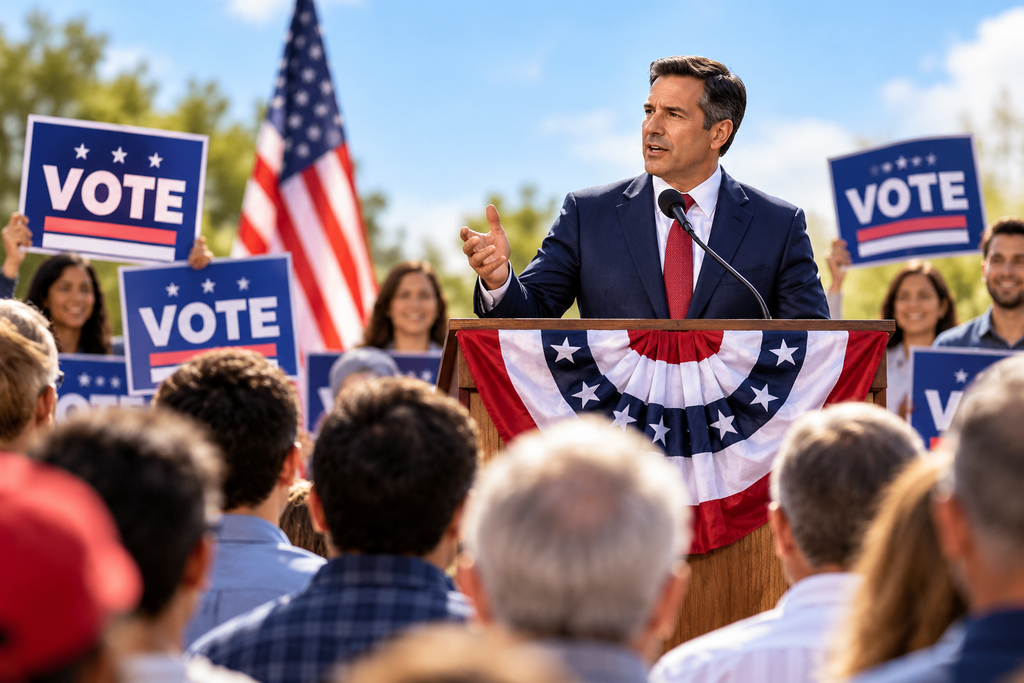
- Events and appearances. Rallies, town halls, debates and local visits give voters a chance to see the candidate directly.
- Earned media. News coverage that the campaign does not pay for, such as an interview or a report on a speech, is called earned media, and campaigns work to attract it.
Each method has a trade-off between cost, reach and how personal it is. A small campaign with a limited budget might lean on volunteers and social media. A large one may combine everything. Whichever mix a campaign uses, the same voter often hears from it more than once, in different forms.
Paying for it: how campaigns raise and spend money
Campaigns cost money. Staff need to be paid, ads need to be bought, and travel, printing, software and office space all add up. So fundraising is a major part of campaigning, and for many campaigns it takes up a great deal of the candidate’s time.
Money comes from several places. Individual donors give directly, from small online contributions to larger gifts. Parties and political committees may contribute or spend on a candidate’s behalf. Organizations such as unions, businesses and advocacy groups may take part where the law allows. Candidates sometimes put in their own funds as well. In some places, public funding programs match small donations or cover part of campaign costs.
Because money can influence politics, governments set rules. The details differ widely between countries, and in the United States between federal, state and local elections. Common types of rules include:
- Contribution limits on how much a person or group may give.
- Disclosure requirements that make campaigns report who gave money and how it was spent.
- Restrictions on certain sources, such as foreign donors.
- Rules on coordination between campaigns and outside groups.
The reasons behind these rules are debated. Supporters of stricter limits argue they reduce the influence of large donors and the appearance of corruption. Supporters of fewer limits argue that giving and spending money are forms of political expression. Whatever your view, it helps to know the rules exist and that reports on donors are often public. If you want to see how groups try to influence officials outside elections, our piece on what lobbying actually is covers that separate activity.
The final stretch: early voting, get-out-the-vote and Election Day
As the election gets close, a campaign shifts from persuading to making sure people vote. This is usually called get-out-the-vote, or GOTV.
Many places allow some form of voting before Election Day, through early in-person voting, mail ballots or both. The rules differ from state to state and country to country, including deadlines and how a ballot must be returned. Campaigns pay close attention to those rules, because they affect when and how supporters can vote. Voters can check the dates and requirements for their own area with their local or state election office.
In the last weeks, campaign activity typically includes:
- Reminding supporters of registration and ballot deadlines.
- Telling people where and when they can vote.
- Calling or visiting voters who have not yet voted.
- Offering help such as rides to polling places in some cases.
- Tracking which people have already voted, where that information is available, so that effort goes to those who have not.
On Election Day, campaigns run final reminders, and poll watchers or lawyers may monitor polling places within the rules. When polls close, the count begins. Results can take days in close races, since ballots must be verified and counted, and in some places mail ballots arrive after Election Day within a legal window. Results become official only after the certification process is complete.
How to read a campaign with a clear head, whichever side is talking
Knowing the toolkit makes campaign activity easier to interpret. A few habits help, no matter who is speaking.
Notice what is being asked of you. Is a message giving you information, asking for a donation or trying to make you worried about something? Knowing the goal helps you weigh the content.
Check claims against the source. A statistic in an ad is chosen because it helps that campaign. Look for where the number came from and what it leaves out. Voting records, official budgets and nonpartisan fact-checking organizations are useful starting points.
Treat polls as estimates. Look at the sample size, the margin of error and who ran the poll. A single poll tells you less than a pattern across several.
Compare different sources. Reading how outlets with different leanings cover the same event can show you what each emphasizes. A news comparison tool can help, and one option is reviewed in this Ground News review.
Separate the candidate from the campaign. An ad, a mailer and a social media post are products of a communications team. They show how the campaign wants to be seen, which may differ from the full record.
Look at the places campaigns go. Where candidates spend time and money shows who they think can be won. In presidential races, our explainer on swing states shows one clear example.
None of this requires cynicism. Campaigns are a normal part of how voters choose their representatives, and every side uses the same set of tools. Understanding them lets you decide what you think about the candidates and issues on your own terms.
Keep going with the next piece: see how the Electoral College shapes where presidential campaigns spend their time in How The Electoral College Affects Campaign Strategy.