Lobbying is one of the most talked-about and least understood parts of American politics. The word often shows up in headlines as shorthand for something shady, and sometimes as shorthand for ordinary advocacy, depending on who is writing. So what is lobbying in politics, and why do people on every side of the spectrum do it? This article defines the term, follows one invented example from a first meeting to a vote, and gives the strongest arguments for and against the practice.
Lobbying in plain English: asking those in power to listen
Lobbying is the attempt to influence a government decision by communicating directly with the people who make it. Those people are usually legislators and their staff, but they can also be agency officials, mayors, or city council members. The message can be a request to pass a bill, change one, or leave existing law alone.
Anyone can do it. A person who calls a congressional office to ask for a vote on a particular bill is lobbying in the broad sense. When most people use the word, though, they mean something more organized: a group of people, often paid, who spend their working time making a case to officials.
The right behind it is old. The First Amendment protects the right of the people “to petition the Government for a redress of grievances,” and lobbying is one of the main modern forms of petitioning.
Who lobbies: businesses, unions, nonprofits, advocacy groups and local governments
Lobbying is not limited to large corporations, though they are the most familiar example. The range of groups that lobby is wide:
- Businesses and trade associations. A single company may lobby for itself, while an association speaks for a whole industry, such as hospitals, farmers, or software makers.
- Labor unions. Unions lobby on wages, workplace safety, and the rules for organizing.
- Nonprofits and advocacy groups. Environmental organizations, gun rights groups, gun control groups, civil liberties groups, and religious organizations all send people to make their case.
- Professional associations. Teachers, doctors, lawyers, and engineers each have groups that watch for laws affecting their work.
- Local and state governments. Cities, counties, school districts, and universities hire lobbyists or employ their own staff to ask for funding and to weigh in on rules that affect them.
Groups on the left, the right, and in the middle all use the same basic tools. The causes differ, and the methods are largely the same.
What a lobbyist does all day, from briefing staff to drafting language
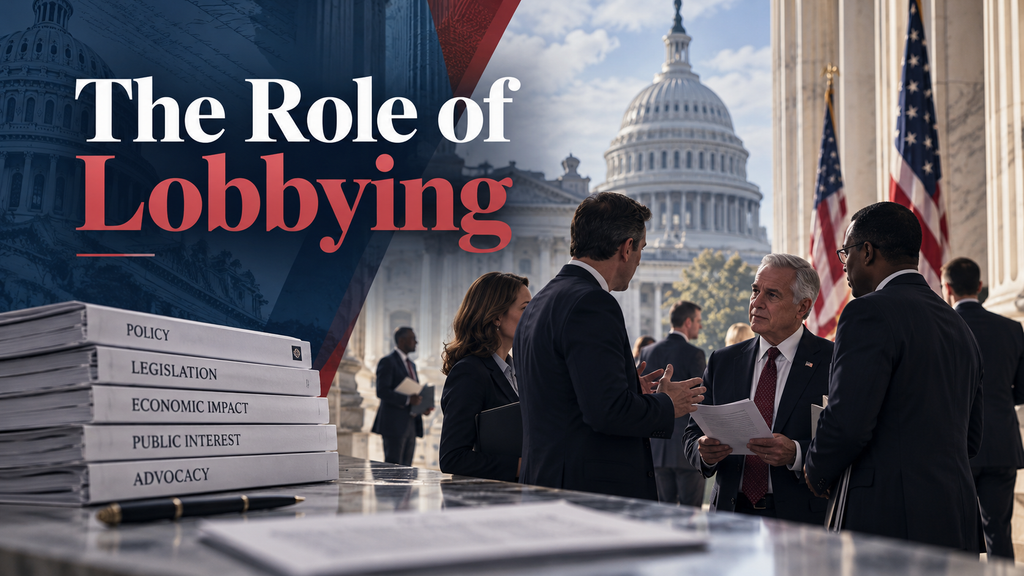
The popular image is a dinner with a senator. The daily work is usually less dramatic and involves a lot of paper and email.
Much of it is briefing. Legislators handle a huge range of subjects, and their staff members are often generalists who have a few days to understand a topic. A lobbyist who knows one issue deeply can supply a short explainer, data, and examples from the legislator’s own district.
Other typical tasks:
- Tracking bills and hearings so the group knows what is moving and when.
- Meeting with legislative staff, and sometimes with the legislators themselves.
- Drafting amendments or full bill language that a sympathetic member can introduce.
- Preparing witnesses to testify at committee hearings.
- Working with other groups that share a goal, which connects to how coalitions and alliances form.
- Reporting back to the group’s members or employer on what is happening.
Because much of the job is supplying information, lobbyists can be useful to the officials they approach, even when those officials end up disagreeing with them.
A hypothetical issue followed from first meeting to vote
The following example is invented for illustration. It does not describe a real bill, group, or district.
Imagine a national association of small-town water utilities. Its members run aging pipes and treatment plants, and they cannot afford the repairs on local rates alone. The association wants a federal grant program for water system upgrades.
The first meeting. The association’s lobbyist asks for a meeting with the staff of a representative on the relevant committee. She brings a two-page summary, repair cost figures from member towns, and a few examples from towns in the representative’s own district. The staffer asks questions, takes notes, and says the office will think about it.
Building support. The association finds allies. A plumbers’ union backs the idea because repairs mean jobs. A public health group supports it for safe drinking water. Together they approach more offices, with some Republican and some Democratic. A representative who likes the idea agrees to sponsor a bill, and the lobbyist helps the sponsor’s staff draft the language.
Opposition appears. A taxpayer group objects to the cost. A group representing large cities argues the funding formula favors small towns and wants it changed. Each sends its own lobbyists, who make their cases to the same offices. Staff members now hear three versions of the story, and legislators weigh them against what they hear from voters at home.
Committee and changes. At a committee hearing, the association’s witness testifies, and so does a critic. The committee amends the bill: the total is trimmed, and the formula is adjusted to include some larger cities. The association loses some money and gains more votes. This kind of trade is normal, and it is the stage where a bill’s path through Congress often decides whether it survives.
The vote. The amended bill reaches the floor. Lobbyists spend the final days contacting undecided offices and confirming who plans to vote how. The bill passes or fails by the numbers. If it passes, the lobbying does not end, because the groups will then ask the agency writing the program’s rules to interpret them in their favor.
In this example, three sides lobbied the same offices, and none of them controlled the result. The outcome came from votes, and the lobbyists shaped what the voting members knew and wanted.
The rules: the right to petition, registration and disclosure, and gift limits
Lobbying is legal and regulated. Federal law, mainly the Lobbying Disclosure Act of 1995 and later amendments, sets the basic framework.
- Registration. People who meet the law’s definition of a lobbyist must register with Congress, and organizations that employ lobbyists must be listed.
- Disclosure. Registered lobbyists file regular reports stating which issues they worked on, who paid them, and roughly how much. These reports are public, so reporters and ordinary citizens can look them up.
- Gift limits. House and Senate rules sharply restrict gifts from lobbyists to members and staff, including meals and travel. Exceptions exist, so reading the specific rule matters before judging a particular case.
- Revolving door limits. There are waiting periods before some former officials can lobby their old colleagues.
States and cities have their own lobbying laws, and these vary widely. A rule that applies in Washington may not exist in a given statehouse. Registration thresholds and exceptions also mean some influence activity never appears in the reports, which is one reason critics want the disclosure rules widened.
The case for lobbying and the case against it, fairly stated
Thoughtful people disagree about lobbying, and each side has real arguments.
The case for
- It is protected speech. The right to petition is written into the Constitution, and banning or heavily restricting it would raise serious First Amendment problems.
- Legislators need information. Congress covers everything from farm policy to cybersecurity. Specialists who explain how a rule works in practice help officials avoid mistakes.
- It gives groups a voice. A small group with a narrow concern, such as a rare-disease patient community, can be heard by a lobbyist when its members could not each travel to the capital.
- Opposing sides compete. In the example above, several groups pulled in different directions. Defenders say this contest exposes weaknesses in every proposal.
The case against
- Money buys access. Groups with more resources can hire more lobbyists and win more meetings, so wealthy interests may be heard more often than ordinary voters.
- Information can be one-sided. A lobbyist presents the facts that favor the client. Staff with limited time may not hear the other side.
- The revolving door. Officials who leave government for lobbying jobs, or the reverse, may be tempted to favor future employers or former colleagues.
- Narrow interests can win over broad ones. A concentrated group with a lot at stake will work harder than a scattered public whose individual stake is small, and that can tilt the outcome.
Both sets of arguments describe real features of the system. The disagreement is usually about how much each one matters and which reforms, if any, would help without limiting legitimate petitioning.
How to read news about lobbying and spot your own bias
Coverage of lobbying often reflects what the writer thinks of the group involved. A few habits help you read it more fairly.
- Check your reaction to the group. If you cheer when a group you like lobbies and object when a group you dislike does the same thing, notice that. The activity is identical, and your opinion is about the cause.
- Look for what was actually done. “Lobbied” can mean a phone call, a drafted amendment, or a large spending campaign. Look for the specific action and the amount reported.
- Find the disclosure records. Registered lobbying reports are public, and they show who paid whom for which issue.
- Ask who is on the other side. If an article names one group, search for the groups that opposed it.
- Compare sources. Reading the same story from outlets with different leanings shows which details each one chose to include.
Ways ordinary citizens can lobby too
You do not need a registered lobbyist’s title to take part. Citizens have several direct options:
- Contact your representatives. Phone calls, emails, and letters to your House member and senators are counted by their offices. A short, specific message about one bill works better than a long general one.
- Visit a local office. Members have district offices, and many hold public town halls where you can ask questions in person.
- Testify or submit comments. Legislative committees and agencies often accept public testimony or written comments on proposals.
- Join a group. Membership in an organization that shares your view pools your voice with others and pays for professional representation. It is the same logic behind the coalitions described earlier.
- Start local. City councils, school boards, and county boards are often easier to reach than Congress, and a few residents showing up can change the conversation.
Lobbying is one of the main ways information, requests, and pressure reach people who make laws. Understanding it makes it easier to judge any particular story about it, whichever side you support.