
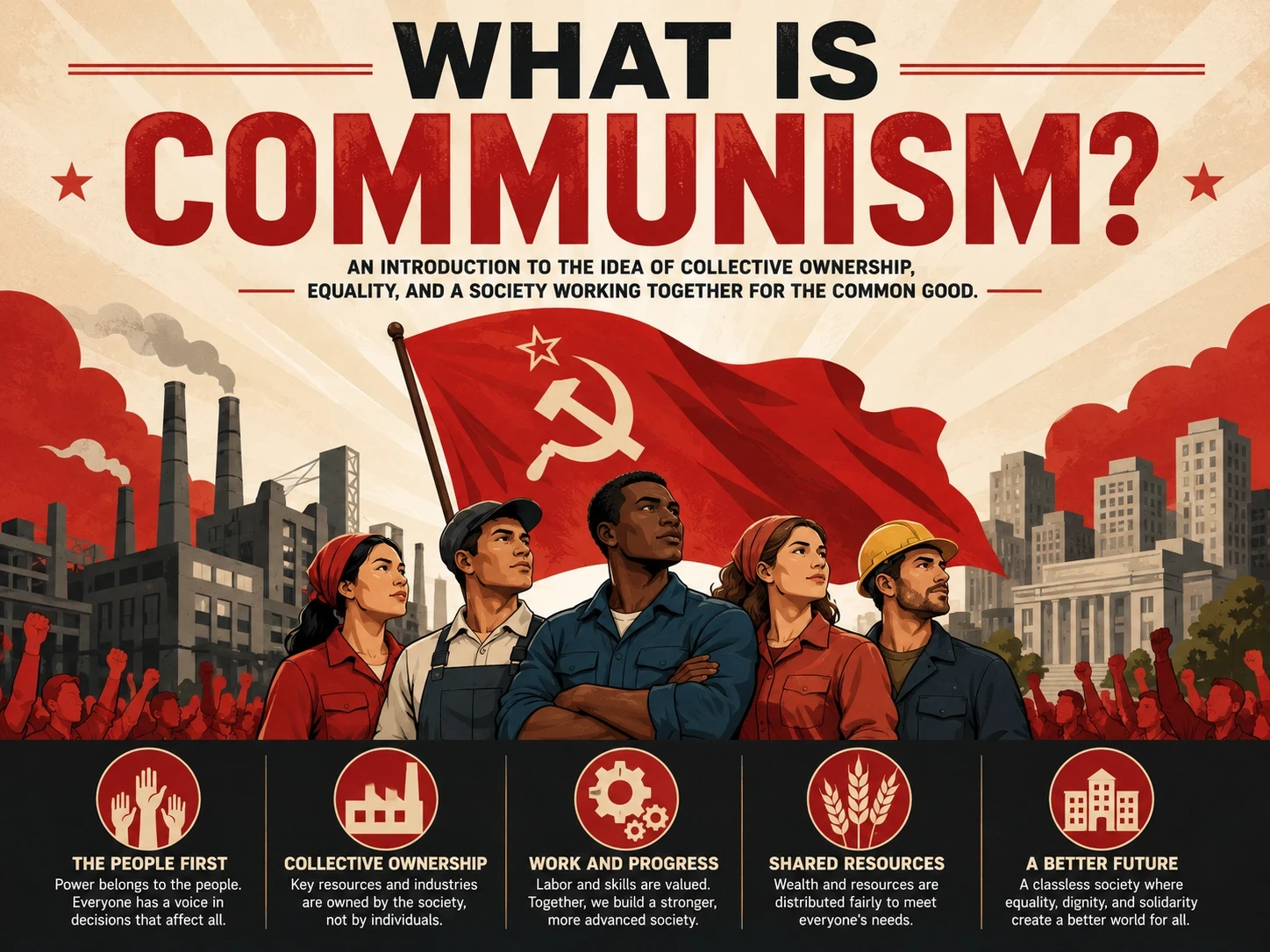
 Communism didn’t just pop up out of thin air. The Industrial Revolution stirred things up big time, getting folks like Karl Marx and Friedrich Engels thinking about how society is organized. The massive gap between the rich and the poor was hard to ignore as factories sprang up and cities grew at neck-breaking speed.
It’s impossible to discuss communism without mentioning “The Communist Manifesto.” Marx and Engels penned this guide as a call to arms, putting the spotlight on the struggle between classes. They believed that workers, or the proletariat, were getting the raw end of the deal and were bound to rise up eventually. This manifesto highlighted the need for a radical shift toward communal ownership where everyone reaps the benefits of their hard work.
Back in the day, society was pretty rigid, with profit and power concentrated in a few hands. Marx dreamed of a world where this wasn’t the case, envisioning a society where everyone pitches in according to their ability and receives according to their need. A place where the power belonged to all people, not just elite groups. You can think of it as an ambitious blueprint for a more equal world.
Fundamental Principles of Communism
Diving into the core of communism, it’s all about sharing. Imagine everyone co-owning everything, from the factories that make goods to the farms that grow food. This idea of communal ownership is designed to ensure that no single person or group hoards wealth while others struggle.
At its heart, communism dreams of a society without classes. The aim is to get rid of the distinctions between the rich and the poor, so everyone’s seen and treated the same. No one person’s voice should outweigh another’s simply because of their bank account. It’s a lofty goal, aiming for total equality in every aspect of public life.
The state plays a really interesting role here. Early on in a communist society, a strong state might step in to manage things and make sure everyone’s pitching in and getting their fair share. But the ultimate vision? A future where the government isn’t even necessary because the community runs itself. Basically, the idea is to hand the reins over to the people, making way for an all-encompassing rule by the masses.
These principles laid the groundwork for a movement that promised sweeping economic changes, aiming for a world where society operates cooperatively and fairly without oppressing one group over another. It’s about setting up a system where everyone’s basic needs are met, and the incentives aren’t just financial but rooted in human welfare.
The Global Influence and Spread of Communism
Communism isn’t confined to just books and theories. It made real-world waves, especially throughout the 20th century. The ripple effects were felt worldwide, with different regions putting their unique stamp on the ideology.
In Asia, communism took root in countries like China and Vietnam. China’s approach, under the leadership of Mao Zedong, adapted Marxist ideas to fit its own cultural and economic context, which led to a brand of communism that mixed traditional values with revolutionary zeal. Vietnam’s story tells of a long fight for unity and independence, led by Ho Chi Minh, intertwining nationalism with communist ideas.
Turning to Europe, the Soviet Union was easily the biggest influencer when it came to communism spreading. The USSR positioned itself as the leader of the communist world, encouraging satellite states in the Eastern bloc to adopt similar systems. Countries like East Germany, Poland, and Hungary were part of this “Red Curtain,” each dealing with their own struggles and successes.
Even today, communism has managed to hang on in some parts of the world. North Korea maintains its own unique form of communism, heavily focused on self-reliance and military power. Meanwhile, Cuba has kept up its system founded by Fidel Castro, despite external pressures and its own internal reforms.
Communism’s impact has always been a mix of ideology and practical adaptation, showing how an idea can cross borders and shape nations. As we look at these countries, it’s evident that communism’s influence varies significantly, weaving itself into each country’s fabric differently and with varying levels of success and challenge.
Communism vs. Capitalism: A Comparative Analysis
Communism and capitalism are like opposite sides of a big ideological coin. At the heart of their differences is how they each approach economic structure. Communism pushes for public ownership of resources, meaning no individual runs the show. On the other hand, capitalism loves private ownership, with business needs and market forces driving growth.
Wealth distribution is another huge area where these two clash. Communism envisions a fair share for all, trying to keep inequality at bay by ensuring everyone gets what they need. Capitalism’s mantra leans toward the idea that you earn what you work for, even if it means some people end up with a ton more than others.
The way each system handles work incentives is also worth talking about. Communism counts on people thinking about the common good and contributing because it benefits everyone. Meanwhile, capitalism dangles the carrot of personal gain, betting that the promise of profit will get people fired up to innovate and boost productivity.
Within these contrasting systems, there are debates over which one truly supports human progress and happiness. Many folks argue that capitalism, despite its flaws, enables personal freedom and fosters choice in ways that communism’s structure just can’t match. But communism promises that, by eliminating personal greed, society can achieve true peace and equality.
Exploring these differences isn’t just academic – they have real-world implications, showing up in how economies run and how people live their everyday lives. Understanding both systems can help us see the larger picture and maybe even inspire ideas about how to create a balance that works best for everyone.
Strengths and Weaknesses of Communism
Communism comes with its own set of pros and cons, making it a mixed bag of big promises and tough challenges. On the plus side, its push for equality is huge. By aiming to eradicate class differences and ensure everyone has access to basic living standards, it seeks to level the playing field across society.
The dream of reduced class struggles is another big driver behind communism. When everyone stands on equal footing, the hope is to quash the age-old battle between the haves and have-nots. With communal efforts and shared resources, the focus shifts from individual success to collective wellbeing.
However, putting communism into practice isn’t always easy street. One major hurdle has been getting a truly classless society off the ground, considering deeply ingrained hierarchies and the sheer diversity of needs across populations. Implementation often gets tangled in inefficiency, and critics argue that it stifles innovation since individual incentives aren’t a main driver.
We’ve seen this play out in the historical failures and successes worldwide. Some communist states have thrived temporarily by demanding explicit adherence to party lines, potentially resulting in restrictive or oppressive governance. Others have witnessed struggles such as resource shortages and economic stagnation, hampered by limitations in centralized planning.
Case studies from history offer valuable lessons. For instance, while the Soviet Union might have initially surged in industrial might, it eventually crumbled under economic pressure and lack of innovation. Meanwhile, China’s pivot to incorporate elements of market economies suggests an adaptive side of communism that can learn from past missteps.
Communism’s journey gives us a landscape filled with real-world applications and significant socio-economic effects to ponder. It challenges us to weigh ideals against real-life outcomes, pushing the debate on whether and how some of its principles might still fit into today’s society.
The Future of Communism in a Globalized World
Looking ahead, the big question is whether communism can find a spot in today’s fast-paced global economy. Some thinkers argue that adapting communist ideals is possible by blending them with modern economic practices, crafting a hybrid that respects community goals while embracing market dynamics.
The challenge is creating a balance between personal freedoms and community responsibilities. People crave participation and influence in decisions affecting their lives, yet communism traditionally emphasizes collective action, which can sometimes curb individual initiatives.
Technology might be a game-changer here. As tech continues to evolve, it might help streamline the kind of coordination and resource distribution communism needs to work at its best. Digital platforms and AI might offer new ways to manage resources effectively and equitably.
Still, there’s a lot to consider around how such a transformation could happen without sacrificing liberties people value in their personal and economic lives. As societies grow more interconnected, sharing ideas across borders, bits and pieces of communism might find their way into broader discussions on building sustainable and fair economic systems.
The journey of communism, with all its twists and turns, remains a critical part of understanding how societies can reflect diverse ways to meet the needs of their people. As the world continues to change, communism’s role might evolve too, perhaps helping us rethink how to blend the best ideas from different systems to tackle global challenges.