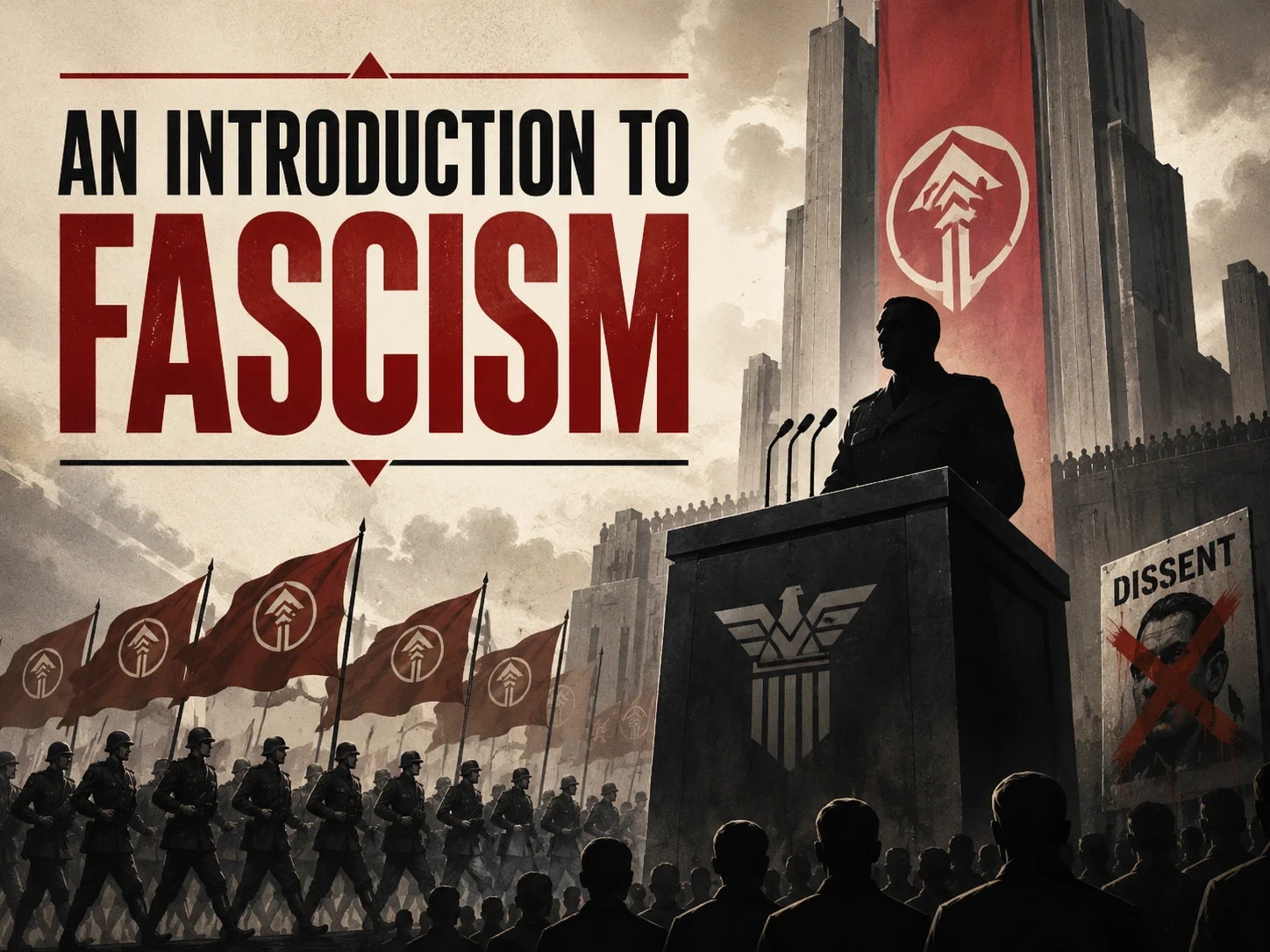
 Fascism is all about extreme authoritarian nationalism. Think of it as a political ideology where the state holds all the power, often led by a dictator who demands total loyalty from the nation. It’s a pretty loaded concept with lots of historical baggage.
Fascism really started making noise in early 20th-century Europe. All that turmoil after World War I left countries in crisis. Many turned to strong leaders promising stability and glory, setting the stage for fascism’s rise. These leaders offered scapegoats for problems, making it easy to blame ‘the other’ and rallying people around national pride.
A few key figures really shaped fascism’s image. Benito Mussolini in Italy went full throttle into this ideology with his totalitarian regime. And Adolf Hitler took these ideas to terrifying heights with Nazi Germany. Over in Spain, Francisco Franco grabbed onto fascism during the Spanish Civil War and held tight into the late 20th century.
After World War I, the world was a mess. Economic collapse, loss, political chaos–fascism fed off this instability like a leech. People who were disillusioned, scared, or longing for past glory found comfort in these ideologies that promised a return to greatness.
While fascism shares some traits with other political ideologies like communism or socialism in terms of state control, it’s got its distinct flavor. The heavy dose of nationalism and extreme hierarchy sets it apart. Fascism’s usage of propaganda, along with a heavy focus on militarism, made it unique and just as dangerous.
Anatomy of Fascist Ideology: Core Tenets and Beliefs
At its heart, fascism thrives on authoritarianism and nationalism. Fascists believe in a strong, centralized government headed by a powerful leader. This leader’s authority is unquestioned and absolute, demanding total allegiance from citizens.
Propaganda plays a massive role in shaping the public’s perception. Fascist regimes often control media, schools, and communication channels to spread their ideology and manipulate public opinion. This ensures everyone gets the same story, often marked by misinformation that glorifies the regime and demonizes its enemies.
The ‘us vs. them’ mindset is a cornerstone of fascist beliefs. Creating an enemy, whether it’s another nation, an ethnic group, or political opponents, helps galvanize citizens under a common cause. By identifying and blaming others for societal problems, fascists foster unity and loyalty among the populace.
Opposition isn’t just discouraged under fascism; it’s outright crushed. Freedom of speech takes a backseat as any dissent is heavily punished. Public discussions and criticisms are stifled to maintain control over what can and cannot be said.
Finally, there’s a heavy emphasis on violence and militarization. Fascist states glorify war and conflict as means to demonstrate power and discipline. Military parades and aggressive foreign policies aren’t just common; they’re celebrated as proof of a nation’s might and determination to uphold its values.
Fascism’s Impact on Society: Cultural and Economic Consequences
Fascist regimes leave deep marks on the cultures they control, driven by censorship and propaganda. Art, music, literature, all get shaped to serve the state’s narrative, promoting ideals that align with their propaganda. The creative freedom that encourages diversity and innovation often gets stifled under fascism’s heavy hand.
Economically, fascism loves state control, with governments taking the reins over industries. This is often touted as “corporatism,” where the interests of the state and corporate sectors merge. Of course, this approach favors certain groups while casting aside ordinary workers’ rights and interests, creating a skewed system that supports those in power.
Social hierarchies and class tensions reach new levels under fascism. The regime prioritizes certain groups, creating a society where loyalty to the state earns rewards, while others face oppression or neglect. This divisive approach exacerbates existing tensions, making it hard for any real sense of unity or equality to flourish.
Fascist policies also bring repression of minorities and ethnic groups. Driven by racial superiority narratives, these policies aim to marginalize or eliminate those deemed “other.” The devastating impact this has on diverse communities is both tragic and profound.
The legacy of fascism continues to echo in political movements. Its symbolism and rhetoric often get co-opted by modern groups looking to fuel nationalist sentiments. Understanding fascism’s past helps in recognizing and countering such tendencies today.
Case Studies: Fascism in Action
Nazi Germany serves as an iconic and terrifying example of fascism in action. Under Adolf Hitler’s rule, Germany became a police state where dissent wasn’t tolerated and ‘racial purity’ was ruthlessly enforced. The consequences were catastrophic, leading to the horrors of the Holocaust and World War II—events that defined an era with immense suffering and shaped global history.
Italy under Mussolini was the birthplace of modern fascism, as his regime rolled out totalitarian policies and sought to expand Italian power and influence, not just domestically, but overseas as well. Mussolini’s propagandized vision of a New Roman Empire ended in a failed attempt to control the Italian economy and military misadventures, ultimately contributing to his downfall.
In Spain, Francisco Franco grabbed power after a devastating civil war. Franco’s regime, marked by severe repression and tight state control, influenced Spain for decades. His leadership left an enduring impact, showing how a fascist-leaning dictatorship could survive amidst global condemnation by maintaining a grip over national politics and unity.
Today, remnants of fascism—sometimes outright neo-fascism—still pop up worldwide. From far-right groups in Europe to movements in other continents, the allure of authoritarian control and nationalism can be appealing to those disenchanted with current systems. Studying past fascisms can arm us with the tools for recognizing and counteracting these dangerous trends.
Perhaps the most crucial lesson is understanding the crucial role people play in preventing tyranny. It’s always about being vigilant, educating ourselves and others about the warning signs, and committing to democratic values. Only by confronting uncomfortable truths about the past can we guard against history repeating itself.
The Global Perspective: Fascism Beyond Europe
Fascism’s roots aren’t just tangled in European soil. It crossed continents and took root in unexpected places, reflecting its adaptability and the underlying allure of its authoritarian promises. Exploring fascism’s global reach gives us a fuller picture of its impact and the universal nature of its tactics.
Japan’s militarism before and during World War II offers a case study in non-European authoritarian expansion. Influenced by extreme nationalism and belief in Japanese supremacy, this period led to aggressive imperialism across East Asia. Japan’s history during this era shows how fascist-like tendencies can manifest in different cultural contexts, often contributing to horrific war crimes.
Latin America saw several authoritarian regimes with fascistic elements, though they often skewed towards unique local flavors. Strongmen like Argentina’s Juan Perón blended dictatorial practices with populist policies. While not fascist in the traditional European sense, these regimes demonstrate how authoritarian ideologies can adapt to various historical and social conditions.
The United States, during World War II, played a defining role in battling fascism, highlighting how external forces and global solidarity can impact the fate of fascist regimes. However, the U.S. itself wasn’t entirely free from fascist influence, as homegrown movements occasionally emerged, spurred on by charismatic leaders who pushed isolationist and nationalist agendas.
Non-European historical figures, from Julius Nyerere in Tanzania to Sukarno in Indonesia, have sometimes flirted with authoritarian measures wrapped in nationalistic rhetoric. These examples remind us of how easily the fascist narrative can adapt and blend into different political landscapes.
Understanding these global beats of the fascist drum is important for several reasons. It highlights how such ideologies can exist and overtake any society, regardless of geography. Recognizing these historical patterns and their consequences sharpens our ability to combat similar threats in contemporary settings, reminding us of the value of vigilance and global cooperation.
Combating Fascism: Challenges and Strategies for the Future
Spotting the warning signs of rising fascism is crucial. It involves looking out for over-the-top nationalism, erosion of democratic values, and the alluring yet deceptive pull of populist rhetoric. Knowing what to look for helps nip these tendencies in the bud before they snowball into something more dangerous.
Education is a powerful weapon against the darkness of fascism. By teaching people, especially the younger generation, about history and the consequences of intolerance, society can foster a resistance to extreme ideologies. It’s about building a culture of critical thinking, where individuals question rather than blindly conform.
Creating an inclusive, tolerant society might sound like a lofty goal, but it’s essential. Promoting empathy, respect for diversity, and collaboration across cultures strengthens the social fabric and leaves little room for divisive ideologies to take hold.
Strengthening democratic institutions and promoting transparency are key in keeping fascist tendencies at bay. Governments need checks and balances to prevent any one group or individual from grabbing too much power. People play a crucial role in maintaining these systems by demanding accountability and integrity from their leaders.
At the global level, cooperation and dialogue play a major part. When nations work together, sharing insights and strategies, the global community benefits. Unity among countries creates a more resilient front against the growth of authoritarianism on any front. Collaborating on international platforms to protect democratic values helps ensure that the struggle against fascism remains a collective effort.