
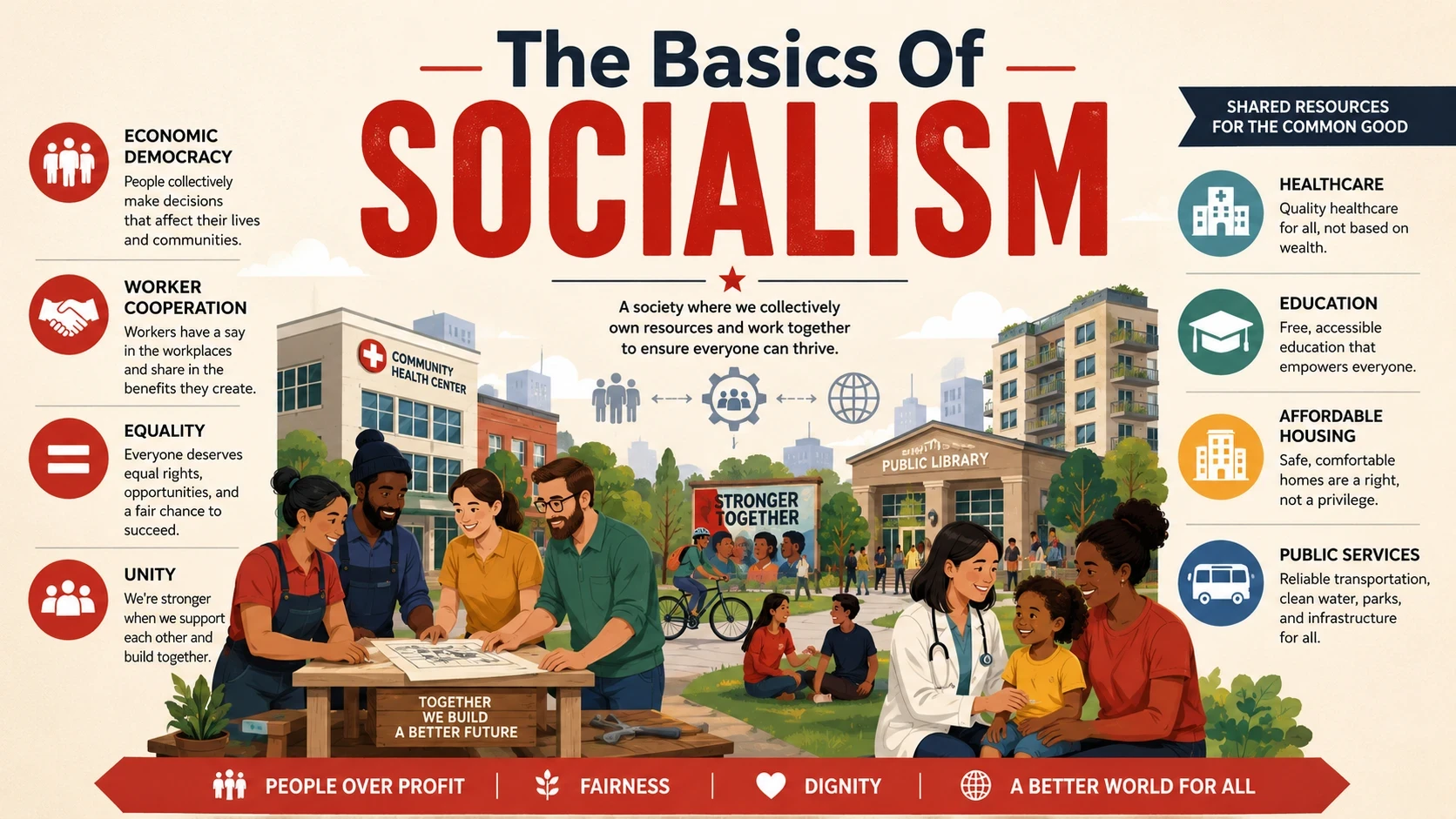
 Socialism is more than just a political buzzword; it’s a worldview aiming for a fairer society where everyone gets a decent slice of the pie. At its heart, socialism is about making sure wealth and power aren’t hoarded by a tiny elite but shared across society. Think of it as a move towards economic equality and social justice, championing the notion that we’re all in this together.
The story of socialism traces back to visions envisioned by philosophers like Karl Marx and Friedrich Engels in the 19th century, who weren’t too happy with the industrial age’s wealth-gap drama. Fast forward to the present, and socialism has evolved, but its essence remains focused on reducing inequalities and empowering the many, not the few.
Similar to how people compare apples and oranges, socialism often gets sized up against capitalism. While capitalism is about free markets and personal wealth, socialism leans on public ownership and the welfare of the community. Both have their perks and pitfalls, but understanding these differences is key to seeing where one ends and the other begins.
In today’s world, socialism isn’t just about dusty old textbooks; it’s part of real-life policies in various countries. From offering free healthcare to ensuring a living wage, it’s about making sure societal structures work for the average Joe. Applying socialist principles is like searching for ways society can function optimally with equality in focus.
The Fundamental Principles of Socialism: Equality and Cooperation
The idea of equality is at the core of socialism, where everyone gets a fair chance and access to resources. It’s about leveling the playing field so that a person’s background doesn’t decide their future. Socialism aims to reduce the gap between the rich and the poor, making sure that wealth isn’t just for those with the right connections or starting advantage.
Cooperation is what makes socialism tick. While capitalism might champion competition, socialism swings the spotlight onto working together. It’s a system where people are encouraged to collaborate rather than compete against each other. Cooperation can lead to shared success and ensure that resources benefit the collective, not just a few individuals.
Public ownership versus private ownership is another big piece of the socialism puzzle. In a socialist setup, important sectors like healthcare, education, and utilities are publicly owned, meaning they’re managed in the interest of everyone. While private businesses do exist, the major focus remains on public assets being used to serve society’s needs rather than just creating private profit.
Collective action speaks volumes about how socialism believes in achieving goals together. When communities come together to make decisions that affect their lives, it fosters a sense of belonging and empowerment. It’s not about sitting back and letting the government do all the work; it’s about active participation ensuring that governance truly reflects the people’s needs.
Economic Structures Within a Socialist System
Planned economies are quite the hallmark of socialism, offering a way to direct resources efficiently. Instead of leaving everything up to market forces, the government takes a front-seat role in planning economic activities. This means deciding what’s produced, in what quantities, and how it’s distributed. It might sound a bit complex, but the idea is to align economic output with societal needs rather than profit motives.
The government and state have their work cut out in a socialist system where economic planning is a big deal. By controlling key industries and implementing economic policies, the state aims to ensure stability and equitable access to essentials. The focus here is on serving public interests while avoiding the wild fluctuations often seen in free markets.
Worker-owned cooperatives are like the poster kids for socialism in action. Picture businesses owned and operated by the very workers running them—it’s all about shared responsibility and profit. These co-ops not only create jobs, but they also empower individuals by giving them a say in decisions that affect their work lives. There are plenty of stories of successful cooperatives around the world, showing how collaboration can lead to thriving communities.
Redistribution of wealth isn’t just spreading money around randomly; it’s about making sure everyone gets a fair shot at life. This can mean higher taxes on the wealthy to fund public services or social safety nets that protect vulnerable individuals. By tackling the economic inequality head-on, redistribution aims to lift everyone up, ensuring a more balanced and resilient society.
Socialism in Practice: Case Studies and Examples
The Nordic Model often stands as a shining blend of socialism with a market-based economy, showing how these two can coexist pretty harmoniously. Countries like Sweden and Norway offer high living standards, funded by hefty public investment in social services. They’re proof that blending state welfare with free-market principles can yield impressive results, balancing fairness with innovation well.
Now, Cuba, on the other hand, takes a more purist approach, showcasing different strengths and hurdles of socialism. Despite strict government control over the economy, Cuba’s renowned healthcare and education systems highlight the pros of public provisioning. However, the challenges faced due to limited freedom and economic stagnation can’t be ignored.
Venezuela’s journey presents both warnings and lessons on navigating socialism’s complexities. Initially praised for its wealth distribution programs and reduced inequality, the economic instability and political upheaval brought about critical downsides, providing a comprehensive cautionary tale for socialist governance.
China’s evolution into a socialist market economy is fascinating, showing how a country can develop rapidly while maintaining socialist ideals. Merging state-controlled enterprises with private entrepreneurship, China has lifted millions out of poverty, marking a success story that still stirs debates over its sustainability and social impact.
Europe offers a fantastic patchwork of socialist policies implemented variously across nations such as Spain and Portugal. Each country takes its path, incorporating diverse socialist elements with their existing democratic frameworks. Observing these provides nuanced insights into how socialism morphs to meet local demands while delivering robust social welfare.
Common Misconceptions About Socialism: Clearing Up Confusion
One of the biggest myths about socialism is that it’s synonymous with state control over every market, including a complete dismissal of market forces. Not true. Many socialist systems actually incorporate elements of the market, promoting a mixed economy where both public and private sectors coexist and contribute to economic growth.
Another skeptical viewpoint ties socialism with dictatorship, suggesting socialism inherently leads to authoritarian rule. This assumption often overlooks democratic socialist nations where citizen input, free elections, and participatory governance play leading roles. Socialism doesn’t necessarily translate to loss of democracy.
There’s a cliché that socialism fosters laziness by discouraging ambition due to its welfare policies. In reality, social welfare is more about securing a foundation from which everyone can pursue their passions without the crippling fear of destitution. It emphasizes offering opportunities and support, aiming to inspire rather than stifle ambition.
Socialism also gets unfairly blamed for being a one-size-fits-all economic model. Like any ideology, it comes in various flavors—democratic socialism, libertarian socialism, and more. Each iteration adapts differently based on cultural, economic, and political landscapes, demonstrating surprising flexibility beyond textbook stereotypes.
The Future of Socialism: Emerging Trends and Perspectives
Socialism in the 21st century carries a fresh sense of enthusiasm, driven by global events and a growing call for social equity. People are increasingly advocating for economic systems that don’t just prioritize corporate profits but aim for wider social welfare and sustainability. It’s a vibrant time for reimagining socialist principles in a modern context.
Technological advancements are reshaping how socialism could be applied. Automation, artificial intelligence, and the gig economy challenge traditional job markets but also introduce opportunities for socialist policies to create fairer work standards and equitable income distribution. These tools might support a more efficient, fair system that resonates with socialist values.
Younger generations are at the forefront, driving a renewed socialist movement with fresh energy and ideas. Issues like climate change, student debt, and unaffordable healthcare are personal, and socialism offers solutions that appeal to many. Young leaders are challenging the status quo and influencing policy discussions worldwide.
Balancing socialist ideals with environmental sustainability is becoming essential. There’s a growing recognition that economic systems must consider ecological impacts, pushing socialism to integrate green policies. This synergy aims to address not only economic inequalities but also environmental justice, paving the way for a holistic view of prosperity.