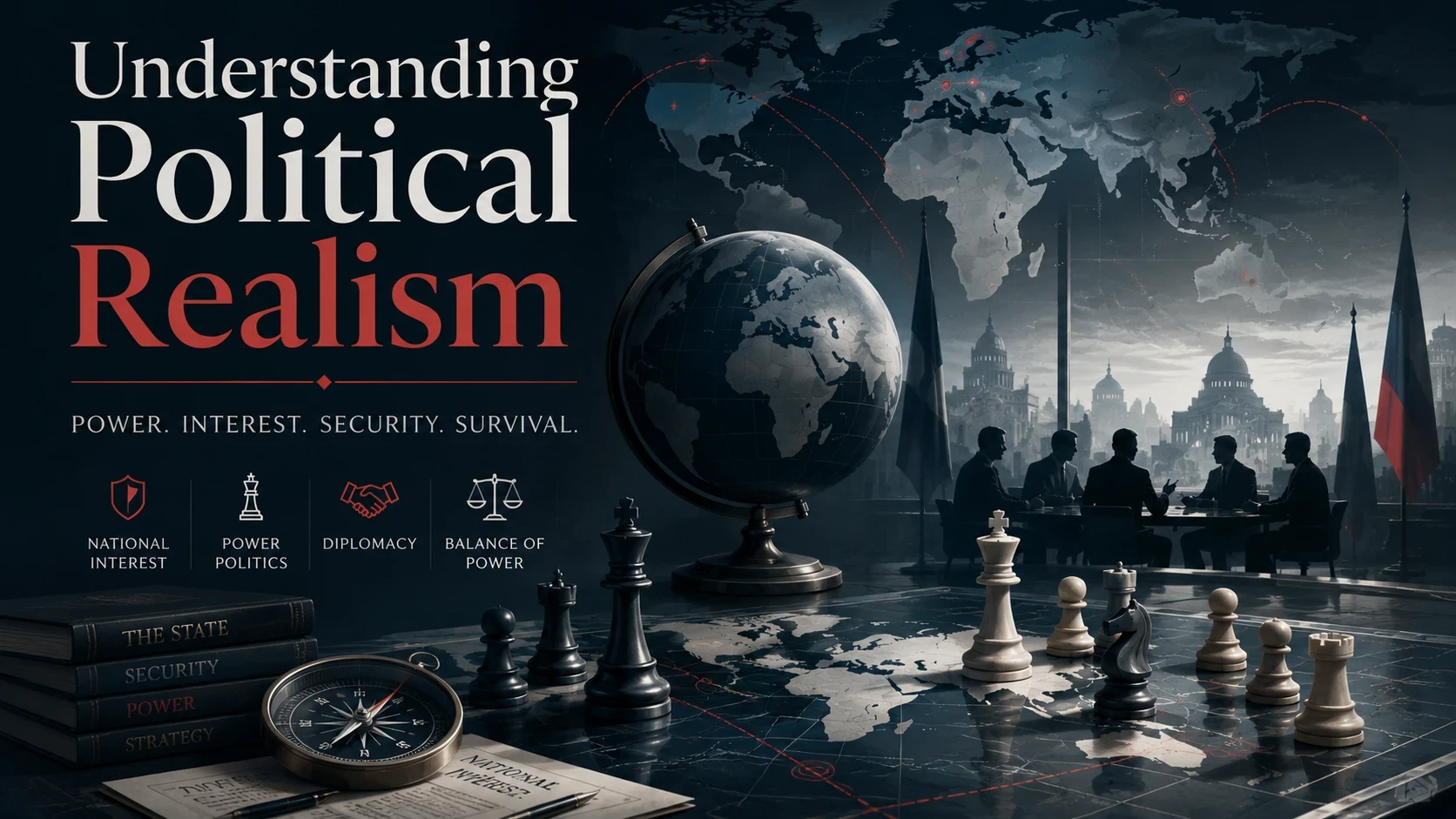
 Political realism isn’t just one of those academic buzzwords that float around without much substance. It’s got roots that dig deep into the annals of history, weaving a narrative about power, self-interest, and survival in an anarchic world. If you’ve ever wondered why nations act in seemingly harsh and self-serving ways, this is the ideology to explore.
Tracing back to times of yore, ancient heavyweights like Niccolò Machiavelli and Thomas Hobbes set the ball rolling for what we know today as political realism. Machiavelli’s famous for ‘The Prince’, which some view as the ultimate guide on wielding power. Meanwhile, Hobbes painted a rather stark picture of the natural world—a state of nature that needs strong rules to prevent chaos. It’s them who laid the ideological cornerstones of realism by emphasizing stability through might and calculated self-interest.
Jumping forward a few centuries lands us at Hans Morgenthau, another giant in the realm of political realism. He came onto the scene like a rock star of political thought, hammering home the concept that international politics is really about that never-ending quest for power. His work helped push realism from philosophical musing to cold hard strategy in international practice.
So, what’s the basic gist of political realism? In short, it’s all about power plays. It assumes the international arena is an anarchical rat race—every nation for itself, motivated by survival and self-interest. Forget about dreamily holding hands and singing Kumbaya across borders. Realism tells you that it’s every state for its own self-interest.
For the pragmatist or the history buff, diving into the guts of political realism will grant a clearer lens for viewing modern-day foreign policy and global power dynamics. Recognizing the roots and key figures in its development gives you a leg up in understanding why certain historical decisions still echo in today’s boardrooms and peace talks.
Realism in Practice: Political Realism in the Real World
Political realism doesn’t sit idly on the bookshelf. It’s super relevant when understanding real-world political maneuverings. Consider the Cold War, where the United States and the Soviet Union played out a massive chess game for dominance, each move calculated with power in mind. It wasn’t about friendly exchanges or shared ideologies then—it was about emerging stronger than the other.
Modern examples, like the ongoing tensions between global powers such as the US and China, offer textbook lessons in realism. Countries pursue strategies that maximize their power while minimizing threats. Think tariffs, alliances, or even cyber warfare; these are all moves in the realism playbook.
While some folks might prefer more cooperative international theories, realism keeps it gritty. It suggests focusing on practical solutions tailored to ensuring a nation’s interest. This comes with its share of criticism, mainly from those pushing for more cooperative approaches or more humanitarian considerations. Realism, however, roots itself in how things are rather than how we wish they’d be.
The interplay between realism and other theories like liberalism and constructivism spices things up. Imagine realism chats with liberal thinkers who advocate diplomacy and interdependence, or the constructivists who think values and beliefs shift power structures fundamentally. Each theory offers its version of the “should” in world politics.
Realism isn’t a rigid how-to guide; instead, it adapts to how state relations evolve over time. Despite criticisms, its embrace by policymakers signals its relevance. Knowing how realism operates in practice can help anyone in understanding why leaders make difficult decisions focused on tangible gains rather than idealistic partnerships.
Critiquing Political Realism: Debates and Counterarguments
Political realism often gets called out for its tough-love approach to international relations. Some say it sidelines morals and ethics, focusing too much on power and less on humanitarian concerns. Skeptics argue that ignoring ethical considerations can lead to harsh policies that might not sit well with modern values.
A common critique is that realism views the world too narrowly, often dismissing cooperation or peace initiatives that don’t immediately benefit state power. Critics wonder if political realism paints too grim a picture, rendering cooperation as naive or impractical. Yet, even the staunchest realists acknowledge every statist play doesn’t need to be zero-sum.
Then there’s the issue of whether realism still stands the test of time. As globalization tightens its grip and issues like climate change demand global cooperation, can realism still hack it? Those favoring a more interconnected world might say no. They argue that realism’s focus on state-centric power clashes with themes like global governance or cosmopolitan ethics.
However, realists aren’t one to back down. The ideology counters critiques by emphasizing that while states may not be knights in shining armor, they are pursuing long-term stability. For realists, achieving peace through strength doesn’t mean ignoring diplomacy — it just tempers diplomacy with eyes wide open to human nature’s less savory aspects.
The back-and-forth debates between realism and its critics create a dynamic discussion about how nations should navigate the international landscape. Understanding both sides can help anyone wrestling with current events appreciate the complex dance of idealism versus pragmatism in shaping global affairs.
Political Realism and Modern International Relations
Political realism might originate from centuries-old ideas, but it’s definitely not stuck in the past. Today, it continues to guide many international strategies and policies, reminding us that even in a world full of new challenges, the game of power hasn’t changed all that much.
In the current global arena, realism influences how countries gauge threats and calculate responses, affecting strategies like deterrence and military buildup. Take the ongoing arms race—it’s fueled by the very realist notion that strength deter threats.
Plus, economic policy mirrors realism in how nations use trade and sanctions as tools for achieving national goals. Realists see the international economy not just as a system of profit but as a network of power relations. So when countries impose tariffs or seek new alliances, they’re playing the realist game of power balance.
That’s not to say every state marches to the realist drumbeat alone. Cooperation and diplomacy aren’t entirely off the table—it’s just that realists view them through the lens of broader state interests. In a world where uncertainty reigns, nations prefer hedging their bets with realist-informed strategies, ensuring they’re never at a disadvantage.
Despite the interconnectedness that globalization brought, competition and the quest for dominance are very much alive. Power dynamics continue to shape diplomacy, with states constantly adjusting to maintain their edge.
Appreciating the realist touch on modern international relations can help anyone understand why some seemingly harsh policies remain at play. It isn’t necessarily about bad intentions—it’s about safeguarding sovereignty in a world where every move counts.
Case Studies: Political Realism in Action
Analyzing political realism in practice takes us from theory to real-world scenarios. Consider geopolitical events where national interests were prioritized over utopian ideals. These stories of grit and strategy reveal how countries navigate complex landscapes.
The US-China relationship is a classic textbook of political realism. With giants like these, the acts of power projection go beyond just economic might or might. Military assertiveness, strategic alliances, and advanced tech development like AI reveal the ever-evolving zero-sum game. Each country aims to maximize its sphere of influence while managing assets and allies strategically.
Turn the spotlight to Russia, often seen as moving to the beat of realism. Russia’s foreign policy, especially towards nations in its backyard or in the Middle East, highlights strategic muscle-flexing. Take Ukraine, a vivid example of how underlying realist motivations drive actions that might seem aggressive but are about securing regional influence and control.
Then there’s the Middle East: a hotspot wrapped in layers of realist moves by internal and external actors. From foreign interventions to regional power plays, the balance of power game is always on. Look at how key players like Saudi Arabia and Iran wield influence to secure their strategic interests, shaping the dynamics across the broader region.
These case studies aren’t just stories from news headlines—they’re windows into the complex dance where realism unfolds in decision-making. Understanding these examples helps me grasp why realpolitik, despite criticisms, remains steadfast in shaping the world stage today.
Delving into these case studies allows for a broader understanding of realism at work across different contexts. They offer insights into how realism informs decision-making in international relations, providing a clear picture of why some strategies withstand challenges tied to national interests.
Looking Ahead: The Future of Political Realism
With the world changing faster than ever, political realism isn’t packing up its bags. Instead, it’s poised to evolve and adapt, ensuring it remains relevant amidst fresh challenges and modern dilemmas. The question of how realism will hold up against emerging issues is more pertinent than it’s ever been.
Globalization and technology represent seismic shifts that test the theory’s adaptability. As countries grapple with massive data networks and AI, realism needs to make room for new power dynamics where digital and economic realms might eclipse traditional military might. Future realist strategies will likely need to account for digital sovereignty and cyber capabilities.
Climate change is another big player stepping onto the scene, challenging realism’s focus on state-centric power. No longer can individual states effectively manage these threats alone; collaboration becomes critical, yet realism insists we must not forget national interests in the equation. Balancing power and cooperation might redefine realistic strategies.
Amidst these big changes, realism’s fundamental truths about power and the state could see added nuance. It’s less about clinging to bygone operational tactics and more about evolving as states rethink what their power bases might include. Adapting to these realities could mean factoring in soft power—cultural influence, international branding, and diplomatic finesse.
The future of political realism promises to be a layered, complex landscape where traditional power structures meet new societal demands. Realism won’t be taking its foot off the pedal any time soon; expect it to steer policy while adapting its strategies to fit an evolving world stage.
Staying informed about these shifts can enrich anyone’s understanding of international affairs. Recognizing realism’s continued presence and its potential transformations can offer a keen lens for negotiating the political realities of tomorrow.
This topic got me thinking about how complicated relationships between countries can become. Sometimes it seems like there is no perfect choice, especially when leaders have to consider what could happen next. I’d be interested to hear your thoughts on whether political realism can explain most international decisions, or if you think there are other factors that are just as important.
Thanks for the comment, Monica. I believe that political realism can explain most international decisions. Of course there may be other factors at play as well. It depends on who the current leader is at the moment. Different political parties view national security differently. Just look at the United States. The Democrats view national security issues much differently than the Republicans. Views and situations are always changing.
This was an interesting explanation of political realism, especially the distinction between looking at international relations as we might wish them to be and looking at how nations actually behave when their own security and interests are at stake.
It made me think about the United States and NATO. President Trump has repeatedly pushed NATO members to spend more on their own defense rather than relying so heavily on the United States. Whether someone agrees with his approach or not, it seems to fit the realist idea that even alliances should be evaluated in terms of each nation’s interests, responsibilities, and contributions.
Would Trump’s approach to NATO burden-sharing be a good modern example of political realism—maintaining the alliance while insisting that other members assume more responsibility for their own defense—or would you categorize that approach differently?
– Scott
Thanks for the comment, Scott. I believe Trump’s approach when it comes to NATO is a good example of political realism. While it’s a good thing to keep stability around the world, a country needs to evaluate things from time to time. The EU is doing the same thing since Trump has changed the status quo. Germany for example, is looking to build up their military to the point where it will be the strongest in all of the EU.
They are even talking about having nuclear weapons in the future. Some do not like this idea after what happened in WWII. But it is also an example of political realism.