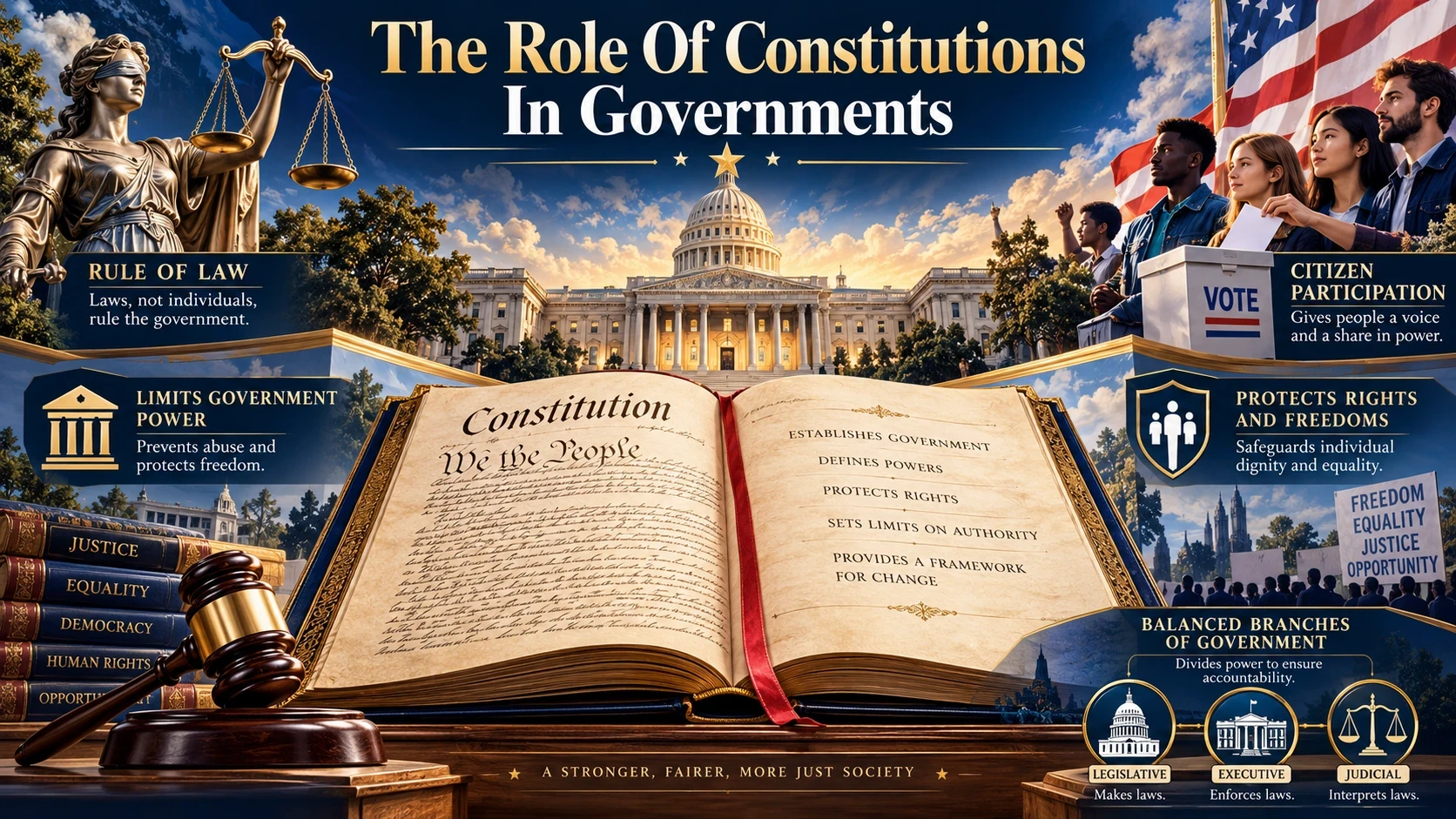
 Alright, let’s break this down: a constitution is like the ultimate rulebook for any government. It pretty much lays down the law on what the government can and can’t do. The constitution sets up the entire framework, saying who holds the power, what their responsibilities are, and where the boundaries lie.
Now, who exactly has to stick to this rulebook? Well, everyone’s on the hook—from the President to your local mayor, including the judges and sometimes even the everyday citizen. These rules apply across the board, making sure there’s a clear guide to follow in maintaining order and fairness.
But not all constitutions look the same. Some are written down formally, while others might be more about tradition and less about paper. You’ve got the rigid types that only change with great effort and those flexible ones that can adapt more easily. Think of it like different smartphone operating systems—same purpose, varied features.
Constitutions are crucial because they lay the groundwork for stability and continuity, even when those flashy political waves roll in. They’re like those safety net chokers that prevent wild swings whenever there’s a change in who’s holding office. Keeping every leader and institution in check ensures that power doesn’t go overboard regardless of political shifts. Without these safeguards, a lot could go wrong real quick.
This is not just about politics. It’s about understanding the fundamental rules that keep everything running as it should. A solid constitution is like a foundation for a building—it must be strong to support everything above it, ensuring a stable and just society.
From Public Authority to Public Accountability: How Constitutions Structure Government
Ever wonder how governments stay in check? That’s all thanks to the constitution, which lays down the structure of government and assigns roles. Think of it like the ultimate user manual for running a country. It decides who gets to do what and makes sure nobody’s stepping on anyone else’s toes over there.
It’s all about balance. We’ve got things like separation of powers where different branches—typically legislative, executive, and judicial—operate independently yet keep a close eye on each other. They’re a bit like tightrope walkers, each carefully balancing their own pole while watching the others in this circus of governance. Plus, federal or unitary systems decide how big decisions get shared or centralized within the country.
When it comes down to the nuts and bolts, constitutions guide everything from how laws are made to how leaders are chosen. They keep the wheels turning smoothly through things like elections, budget approvals, or how they handle leadership changes. All these procedures act like guidelines to prevent too much power from ending up with one person or group.
Constitutions make unpredictability a no-show. They set up clear rules so that when push comes to shove, nobody’s making decisions off the cuff. It tells everyone involved what the rules are before anybody takes a seat at the table. That way, no one’s caught off guard, and there’s far less room for arbitrary decisions or petty political conflicts.
So, next time you hear about a political uproar somewhere, know that the strength and clarity of a country’s constitution might just be what keeps everything in line or, sometimes, spiraling out of control. A well-structured government isn’t just about having rules—it’s about having the right rules and knowing how to keep people accountable to them.
Protecting Rights and Freedoms: The Constitution’s Promise to Individuals
Picture the constitution as the ultimate guardian of our rights and freedoms. It’s like a promise the government makes, saying it won’t mess with these basic liberties we hold dear. Stuff like freedom of speech, the right to privacy, and being treated equally—all of these are tucked away safely within constitutional texts, kind of like precious gems in a vault.
The thing is, writing these rights down isn’t everything. They need to be real in everyday life. That’s the tricky part. Some places are all about rights on paper, but finding them in practice is like hunting for a unicorn. Having constitutional rights doesn’t mean they’re automatically protected—there’s a gap between promise and practice that requires real effort and sometimes even public pushback.
What about when governments feel they need to step on these rights for the greater good? Constitutions carve out exceptions, but they also dictate rigorous checks. Any limiting of rights needs to be necessary, not excessive or arbitrary, and must come with a mechanism for scrutiny and review—none of this fly-by-night business. Proportionality and necessity become the names of the game here.
And let’s not forget about those who often get left behind—the marginalized. Ensuring constitutional protections for everyone might mean tackling enforcement strategies and eliminating bias. It’s not just about what’s written—it’s about how it reflects and impacts every demographic. Equal treatment and adequate enforcement are vital for these rights to truly benefit all citizens.
So while the constitution offers these rights a solid roof, it’s up to everyone—from courts to citizens—to make sure those rights are worth more than the paper they’re written on. In the end, safeguarding these freedoms becomes as much about public involvement as it is about holding leaders accountable to their constitutional promises.
Courts, Citizens, and Constitutional Enforcement: Who Makes the Rules Real?
So, who actually ensures that all those fancy constitutional rules aren’t just gathering dust? Enter the role players: courts, citizens, and a bunch of other key players who keep the system running smoothly.
Constitutional and supreme courts are like the night watch, keeping an eye out for any funny business. They’ve got this thing called judicial review where they make sure laws or government actions aren’t breaking the constitution. It’s their job to call out any step out of line.
But it’s not just the big wigs with the robes. Regular judges, legislatures, and executive bodies play their parts, backing the framework set by the constitution. They’re like the behind-the-scenes crew, ensuring all the props are in place before the big show.
Citizens, hold up your end too. Voting, petitions, peaceful protests, or even just debating at the dinner table contribute to keeping the spirit of the constitution alive. Civic engagement keeps the dialogue open and the government on its toes.
The whole system only works if the practical conditions are in place: think independent courts, freedom of the press, and respect for the rule of law. Without these, constitutions could end up being little more than hopeful words. Everyone has a role in making sure those dreamy ideals stay anchored in reality.
Constitutions need lively participation and commitment to stay relevant. When citizens raise their voices and institutions stand firm, that’s when things get real. It’s all about the collective effort that breathes life into these crucial documents.
Constitutions in Times of Crisis: Security, Emergencies, and Democratic Resilience
Wars, natural disasters, pandemics—you name it, crises can throw any system off balance. Constitutions are meant to be sturdy, but they also need flexibility to deal with these curveballs without going off the rails.
Emergency powers come into play when the chips are down. Think of them as temporary boosts in authority, granting governments the ability to act quickly when time’s of the essence. Nearly every constitution has some form of these, but they’ve got to be managed carefully. Built-in checks like time limits, oversight, and court reviews make sure these powers aren’t abused.
History has plenty of examples of what happens when vigilance slips during emergencies. Power grabs can lead to permanent shifts, threatening democracy itself. Preventing this requires keeping emergency measures firmly under control, using them as tools for resilience, not domination.
Learning from past experiences is crucial to preventing constitutional backsliding. Concrete safeguards are needed to protect independent institutions, maintain public trust, and ensure that returning to normalcy is always on the agenda.
Wise constitutions strike a balance: ready to respond decisively in hard times while ensuring no decision becomes a gateway to unchecked rule. The core mission is to preserve the democracy that grants governments their power in the first place, maintaining the people’s voice in every decision.
Changing the Social Contract: Amendments, Reform, and the Future of Constitutional Government
Constitutions need a way to evolve with the times without losing their core essence. That’s where amendment mechanisms come into play, offering a path to change that respects both tradition and necessity. It’s a bit like upgrading software—you want improvements without crashing the whole system.
Different countries have their own preferred pathways to reform. Sometimes it requires a supermajority vote in the legislature, making sure changes aren’t just a passing fancy. Other times, referendums allow people themselves to weigh in directly. There’s also the more complex route of constituent assemblies or relying on judicial interpretation to address changing needs.
Debates circle around reforms touching on a variety of modern concerns—voting rights, digital privacy, climate responsibilities, term limits, and representation. Each potential change sparks discussions on how best to adapt to contemporary issues while safeguarding the integrity of foundational principles.
At the heart of any discussion around constitutional change is a commitment to balance revolution with retention. Ensuring a constitution is neither too rigid to adapt nor too fragile to preserve the rule of law requires careful consideration and a steady hand.
For everyday citizens, this means understanding what the constitution stands for and finding avenues to participate in its evolution. Asking questions like the constitution’s current protections, interpretation processes, and participation opportunities can steer public engagement, inviting everyone to be part of the ongoing dialogue shaping their country’s future.