
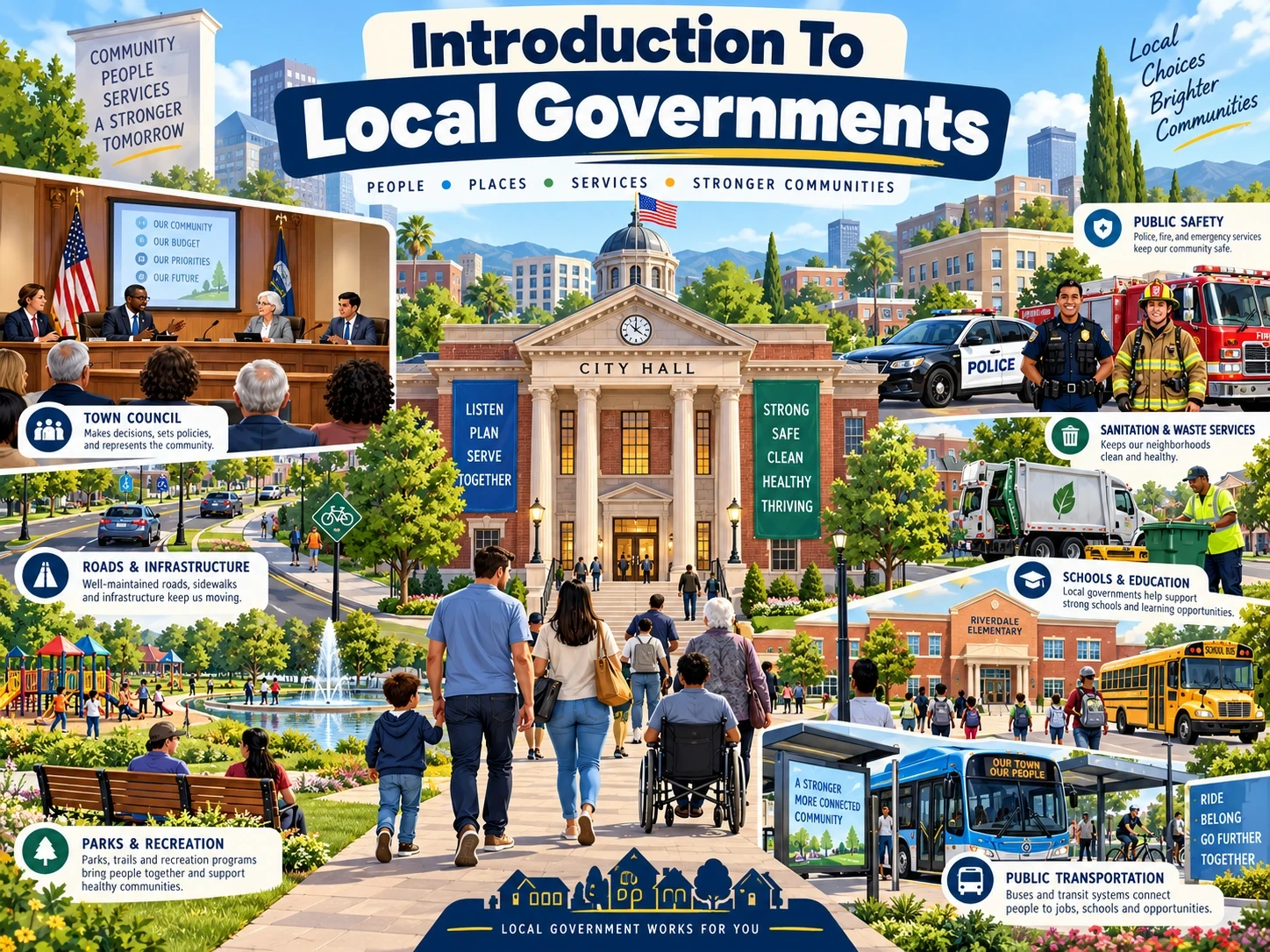
 Local government sounds pretty straightforward, but it touches more parts of our lives than we often realize. From the moment you turn on a faucet or drive down a street, you’ve got local government to thank. It’s a level of governance that deals directly with people, handling essentials like water, roads, parks, libraries, and even your trash collection. It might not be the first thing you think about, but it’s definitely one of the most impactful.
Here’s the deal: local governments are units like municipalities, counties, and townships, often broken into special districts. They are set up to manage day-to-day functions that larger governments can’t handle on such a intimate scale. They might not have the glamor of state and federal powers, but in many ways they are where the rubber meets the road for public service.
Think about everything in your city or town that feels everyday: the park where you jog, the library where your kids get books, or the fire department that’s always ready. These services aren’t floating on some magical cloud. They’re courtesy of local efforts, funded and designed to meet our immediate needs. Local government is right there in the trenches, making sure you and your neighborhood are safe, clean, and functional.
Different places handle these duties in different ways, though. So the tasks or the structure can vary, a lot, depending on your location. It’s essential to know how your local government is set up because recognizing its role and responsibilities helps us interact better and make informed decisions during elections and public meetings.
In many ways, these folks in local offices and councils are the governmental boots on the ground. They’re directly accountable to you—someone in the community. That’s why these roles matter, and that’s exactly why understanding local government is worth your time. Next time you flip on a light switch, think about local government. Their role might be more invisible-centric, but their effects are very much touch, see, and feel—every single day.
Who Makes Local Decisions? Meet the People and Institutions Involved
When we talk about local decision-makers, we’re talking about a mix of elected officials and appointed professionals working together to keep things running smoothly. You’ve got the big names, like mayors and city council members, who set the tone with policies and represent the people’s voice. They’re kind of like the public face of local government. Then there are folks like county commissioners and school board members who tackle specific community needs like infrastructure and education.
But it’s not just about the elected folks. Behind the scenes, there’s a whole team of professionals. Think city managers, planners, and public works directors — the ones who make things happen on the ground. These appointed pros manage the day-to-day grind, everything from ensuring the streets are plowed in winter to updating the local library’s tech systems.
Local government isn’t a one-person show, though. Advisory boards, commissions, and committees provide a venue for people with expertise and passion to weigh in. They review policies, propose innovations, and engage directly with the community. Basically, these are your neighbors contributing time and know-how to better the place we all call home.
It’s crucial to understand how authority works here too. Elected officials make the rules, but it’s the staff that implements them — kind of like how a coach makes the plays but the team carries them out on the field. Both groups need to have a solid working relationship to make sure local government serves its purpose effectively.
And then there’s you — the resident, worker, business owner, or community activist. Your role is huge: voting, attending meetings, sharing feedback, and maybe even running for office or volunteering on one of those advisory boards. Local government is all about community, so your voice truly matters in decision-making.
How Local Governments Are Organized: Common Models and Responsibilities
The setup of local governments can be a bit like choosing between different styles of pizza—same underlying goal, but different toppings. In some places, you’ve got the classic mayor-council model, where the mayor runs the show on the executive side and the council handles the legislative stuff. Other spots might go for a council-manager system, where the council hires a professional manager to get things done. Each setup has its flavor, trying to best fit the community’s needs.
You’ll also find a bunch of special-purpose entities cropping up. These guys focus on one thing and do it well—whether it’s transit, water services, or maintaining parks. They’re set up to tackle those big issues that need focused attention while leaving general-purpose stuff to the main city or county government. Sometimes, overlapping jurisdictions can make it feel like you’re in a puzzle, but each piece has its unique place.
The nitty-gritty of what local governments do can be quite broad. They have their hands in a bit of everything—law enforcement, zoning, public health, and more. Yet, it all depends on where the lines are drawn, literally. Sometimes your neighborhood addresses or popular hangouts might be in another governmental patch without you realizing it. This means you’ve got to dig a bit to know which body handles what. Getting familiar with official maps and checking out your local government’s website can clear things up.
Here’s a tip: get curious and reach out to your local government offices or explore their service locators online. It could save you tons of hassle when you’re trying to figure out who to talk to about that pothole at the end of your street or any quirky neighborhood concerns. Knowing who’s responsible for what creates a smoother pathway to getting involved or addressing issues effectively.
Local governance might not seem like the most thrilling topic at first glance, but understanding how it’s structured helps us know what to expect and who to lean on when it matters. Plus, it gives us a sense of empowerment when we’re actively participating in decision-making or community issues.
Where the Money Comes From—and How Local Budgets Shape Priorities
Ever thought about where local governments get their cash? Just like managing your household finances, they have to juggle multiple income streams. Property taxes are usually the heavy hitter, followed by sales taxes, fees, fines, utility charges, and occasionally, state or federal grants. Sometimes, they issue bonds for big-ticket projects, which is kind of like taking out a loan for a new roof.
Local budgets are more than just spreadsheets; they’re a map of community priorities. When you peek into a local government budget, you’re essentially seeing its values and priorities laid bare. Are they investing in more green spaces or focusing on fixing those dodgy roads? Maybe there’s an uptick in school funding or emergency services. It’s all about balancing—the scarcity of resources with the community’s needs.
Creating a budget involves multiple steps, and anyone can get involved. Local leaders propose what they think the community needs, followed by public meetings where residents can voice their opinions or concerns. After that comes the adoption, where they finalize the budget, much like sealing the deal on a negotiation. Down the road, audits and reports help ensure it all stays on the up and up.
And it’s not just the big stuff, like parks and schools, that get debated. Local governments also have to consider the physical and financial health of their jurisdiction. That means they have to balance between providing affordable services, handling infrastructure wear and tear, and keeping some cash reserves for unexpected emergencies or legal requirements.
Curious about how your community’s funds are being allocated? Check out local websites for budget docs and meeting agendas. Attend those budget sessions, or go over audit reports to get a comprehensive picture. Diving into these details ensures that your voice counts in shaping how local dollars get spent.
How Residents Can Participate and Make Their Voices Heard
Getting involved in local government isn’t just for activists and politicians; it’s for everyone who lives in the community and wants their voice heard. Voting is the most obvious way to participate, but it’s just the tip of the iceberg. Attending meetings, submitting public comments, and reaching out to your representatives are all powerful ways to engage.
Public meetings might sound intimidating, but they’re really where democracy happens at the closest level. Whether it’s a city council meeting, a school board debate, or a neighborhood planning session, these are open forums where your opinion truly counts. If talking in front of a crowd is daunting, consider submitting a written comment or email. It’s all about making sure your views are on the table.
Crafting effective public testimony is an art. Be clear about what you’re asking for, back up your points with relevant details or personal stories, and keep it respectful. A well-prepared statement can influence decision-makers and resonate with fellow residents. It shows that you’re informed and passionate about your community’s future.
Transparency rights like public-records requests and open-meeting laws vary by region but generally, they’re in place to keep residents informed and hold officials accountable. Familiarize yourself with your area’s rules to access the information you need to stay engaged.
With so many ways to participate, there’s room for everyone. Virtual meetings and language support make it easier for more folks to join in. It’s important to engage constructively, keeping dialogues productive and civil. By participating, you help ensure that local government decisions reflect the community’s diverse voices and needs.
Getting Started: A Practical Guide to Understanding Your Own Local Government
Understanding your local government can seem like unpacking a puzzle, but getting started is surprisingly simple and well worth the effort. Begin by nailing down which jurisdiction you belong to. This might sound basic, but it’s not always straightforward because postal addresses and service boundaries don’t always match up. Most local government websites can help you figure this out with a quick search or map.
Once you’ve got that sorted, know your key contacts. Who represents you? What services are available to you? Local sites typically have directories or contact pages that break this down easily. Making these connections can simplify finding answers to community questions or addressing specific local issues.
Public meetings and key documents like budget proposals and service reports are often listed on these sites, giving you a roadmap of when and where to get involved or simply stay in-the-know. This calendar is your toolkit for active participation. Knowing what’s coming up helps you voice opinions and get a feel for what’s happening across your community.
If you’re curious about a particular issue or need to resolve a local concern, follow its trail. Start with agendas and meeting summaries, check staff reports, review public comments, and keep track of the decisions being made. No Sherlock Holmes skills needed; it’s all about piecing together the available info to understand the bigger picture.
Start with resources you trust like government websites, public libraries, and nonpartisan civic groups—these often have everything you need to dive deeper. Once equipped, you’ll find outcomes are more aligned with what the community values and truly needs. Remaining informed encourages more transparent and equitable decision-making.
Embarking on this journey is liberating. By being knowledgeable and engaged, you’re part of the solution, ensuring your community thrives in ways that matter most to those who live there.