
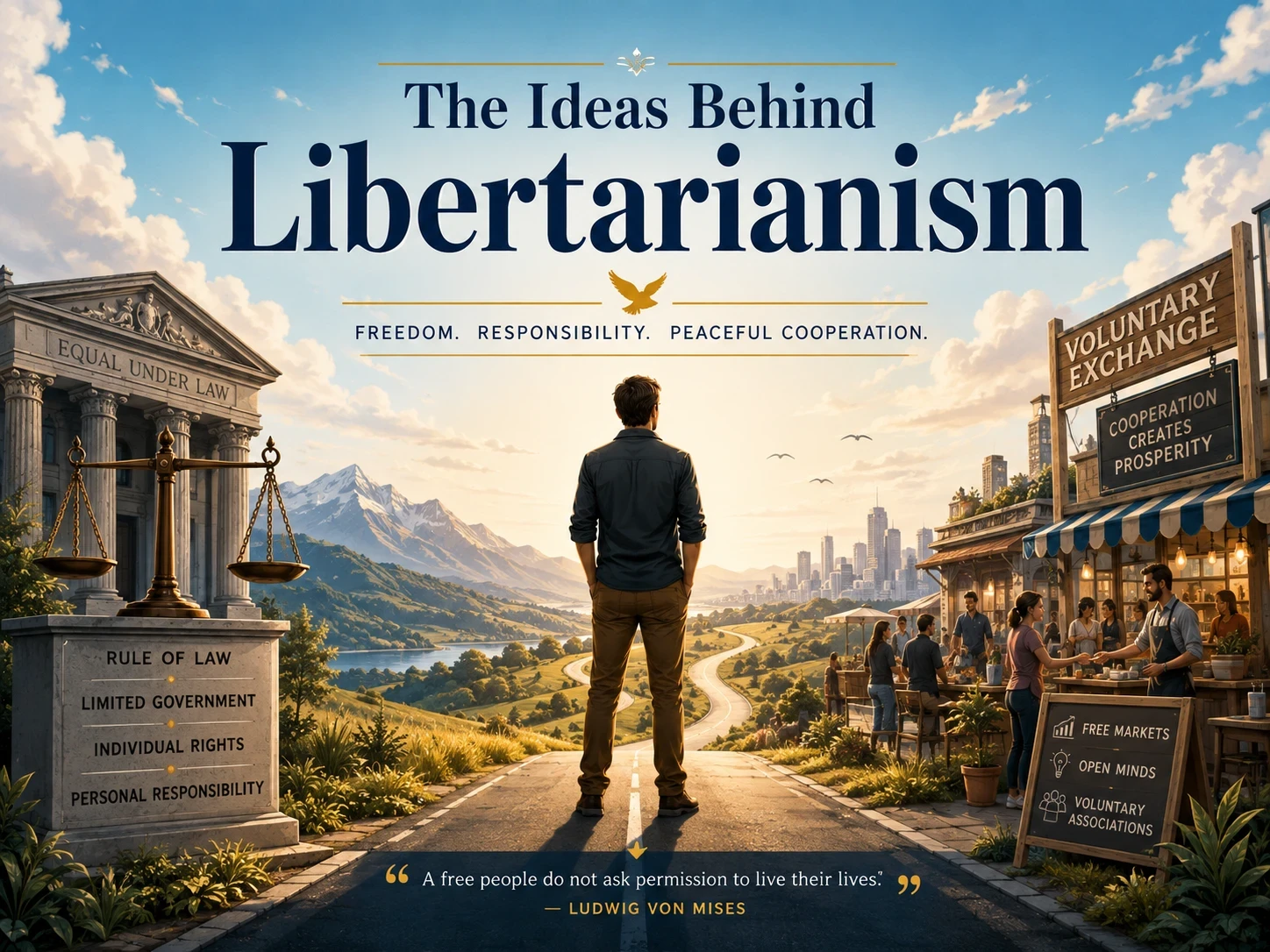
 Libertarianism is all about maximizing personal freedom and minimizing government control. It’s a political philosophy standing strong on the belief that individuals should be free to do as they please, as long as they don’t harm others. The roots of this ideology stretch back to Enlightenment thinkers who valued personal autonomy and freedom from oppressive authorities.
Many notable figures have shaped libertarian thought. For instance, John Locke and his natural rights theory, and Adam Smith with his advocacy for free markets, are massive influences. Modern advocates, like economist Milton Friedman and philosopher Ayn Rand, have also played big roles by promoting ideas of free enterprise and individualism.
There are some common myths that pop up about libertarianism. A big one is that libertarians are anarchists who don’t want any government at all, but that’s not the case. While libertarians definitely promote less government intervention, especially when it comes to personal and economic matters, most still believe some government functions, like protection of individual rights, are necessary.
Trying to compare libertarianism to other political ideologies can get a little tricky. Unlike conservatism, libertarianism doesn’t emphasize tradition as much, and unlike liberalism, it often calls for less government involvement in markets and personal lives. Think of libertarianism as taking a piece from both, but adding a heavy dose of personal freedom and a sprinkle of skepticism towards authority.
The Core Principles of Libertarianism
Personal freedom is at the heart of libertarian ideology. The idea is pretty simple: individuals should make their own choices, whether it’s about lifestyle, career, or belief systems, without unnecessary interference from the government. This principle fights for maximum individual rights, emphasizing that control over one’s life shouldn’t rest in the hands of the state.
Economic liberty walks hand-in-hand with personal freedom in libertarian thought. Advocates firmly believe in the power of free markets, where competition fosters innovation and growth. They argue that minimal government intervention in the economy leads to greater efficiency and more prosperity for everyone. In a libertarian world, taxes and regulations are like the scary monsters under the bed — best kept at a minimum.
When it comes to government, libertarians envision a minimalist role. They recognize that some level of governance is necessary, particularly to protect individual rights, maintain order, and provide public goods like national defense. However, they push for decentralization, giving more power to local authorities and keeping a tight leash on central powers. The saying “less is more” finds a firm believer here.
Justice and the rule of law are paramount in this ideology. Libertarians argue for a legal framework that ensures equality before the law, holding everyone to the same standards. They envision a system where laws are clear, fair, and specifically designed to prevent coercion and aggression, advocating for true justice without bureaucratic red tape. In the libertarian view, justice means protecting individual rights rather than enforcing equality of outcomes.
Libertarianism in Practice: Real-World Applications
Seeing libertarianism come to life in the real world can be eye-opening. Various countries and states have tried embracing certain libertarian policies, showcasing how these ideas work outside of theory. Places like Hong Kong have historically been lauded for their free-market practices, which are a significant draw for libertarians. Meanwhile, U.S. states like New Hampshire, with its Free State Project, aim to amplify libertarian principles by attracting like-minded individuals.
Despite the appeal of limited government, there’s a balancing act involved when addressing social welfare. Libertarians face the challenge of reforming welfare systems to ensure support without heavy-handed government intervention. Innovative solutions, like private charity or community-driven initiatives, are often put forward as viable alternatives to state-run programs.
Delving into specific policies, some city governments have toyed with less housing regulation to create more affordable living spaces. Another example is the debate over school choice, where libertarian ideas push for parental control over educational dollars, allowing more freedom to choose public, private, or homeschooling options.
Critiques of these policies range widely. Some argue that without a safety net, the most vulnerable can get left behind, while others see the successes of entrepreneurship and innovation thriving under fewer restrictions. It’s a mixed bag, but examining real-world case studies of libertarian policies provides valuable insights into what works and what doesn’t.
Libertarianism and Modern Society: Impact and Influence
Libertarian ideas aren’t just locked in academic books or political debates; they’ve made quite a mark on modern society, especially with the rise of the digital age. Issues of privacy and technology are a big deal here. In a world where data is constantly being tracked and stored, libertarians push back, championing strong privacy protections and freedoms online. They argue that personal data should be just that—personal—and fight against excessive government surveillance.
The spectrum of libertarianism doesn’t stop with the core ideas. There are offshoots like Neo-Libertarianism, which blends some traditional conservative views with libertarian principles, or Anarcho-Capitalism, which takes the idea of minimal government to the extreme, seeking a world without any state at all. Each branch offers its own spin on how a libertarian society might look.
Environmental policies bring another contemporary issue into focus. Libertarians often advocate for private stewardship and market-based solutions to environmental problems. They argue that privatizing resources can lead to more responsible management and innovative conservation methods, a perspective that’s both intriguing and controversial.
Libertarianism’s influence also spreads into pop culture and media, finding homes in novels, movies, and even online content. Books like Ayn Rand’s ‘Atlas Shrugged’ or movies such as ‘V for Vendetta’ inject libertarian themes into mass media. Blogs and podcasts foster communities of discussion, keeping these ideas alive and kicking in the broader cultural narrative.
The Future of Libertarianism: Trends and Prospects
Libertarianism keeps drawing interest, attracting folks from various walks of life looking for alternatives to traditional political offerings. The idea of personal freedom, alongside skepticism towards centralized control, resonates with a wide audience, especially amidst growing disillusionment with conventional politics.
Young people are driving a significant chunk of this momentum. Many millennials and Gen Z-ers, raised in an era of rapid technological change and faced with unique societal challenges, find the libertarian emphasis on personal choice and digital privacy appealing. This generational shift could spell a broader acceptance of libertarian principles in the years to come.
Looking at the political landscape, libertarian movements and parties may gain traction as they tap into growing public discontent. For newly emerging political networks, there’s potential to influence mainstream parties’ policies, especially on economic freedom and civil liberties. Whether through individual political candidates or broader policy advocacy, libertarian ideals could steer future legislative decisions.
However, libertarianism isn’t without its hurdles. It’s vital to navigate global challenges like climate change and economic inequality while defending the core principles of the ideology. Maintaining relevance in a fast-paced world will require adaptability without losing sight of the fundamental tenants of liberty and personal responsibility. The path ahead could see libertarianism evolving, yet staying grounded in its timeless principles could help guide the way.