
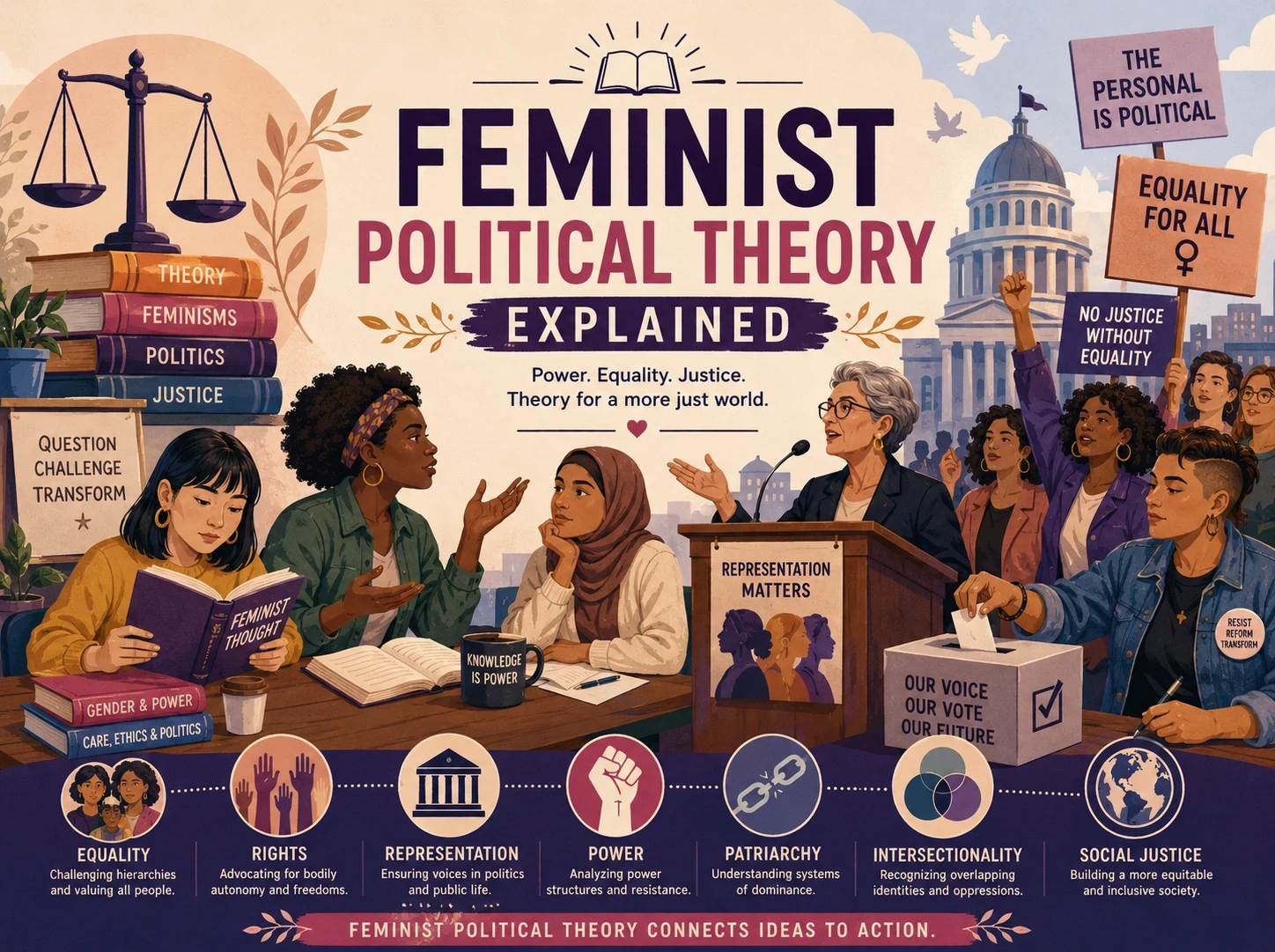
 Feminist political theory is all about understanding how gender and politics intersect. It’s a way to look at how political systems and structures impact women and other marginalized genders, highlighting discrepancies and fighting for equality. This theory sheds light on the barriers that limit political engagement and representation for those who aren’t typically in power.
At its core, feminist political theory seeks justice and equal rights in political contexts. It pushes for change where gender biases have historically dictated who gets a seat at the table. By doing so, it aims to also address wider systemic inequalities, such as those related to race and class, which often compound gender discrimination.
Historically, feminist political thought has evolved through several phases, each contributing to the broader understanding we have today. Starting from the suffrage movement, which called for women’s right to vote, to the radical feminism of the 1960s that challenged deeper societal norms, each phase has influenced not only political thought but legislation and everyday life.
Important figures like Simone de Beauvoir, Judith Butler, and bell hooks have laid the groundwork for what feminist political theory is today. These trailblazers, along with many others, have challenged the status quo and urged societies to rethink ingrained narratives about gender roles.
Ultimately, understanding feminist political theory means looking through a lens that questions everything from voting rights to the portrayal of genders in media. It asks: How can politics be more inclusive? How do we push for policies that favor everyone, irrespective of gender, while also ensuring that those affected are involved in the conversation? These are not just questions but calls to action for a more equitable world.
The Intersection of Feminist Thought with Traditional Political Theories
Feminism doesn’t exist in a vacuum; it’s deeply intertwined with the landscape of traditional political ideologies. Understanding this relationship is crucial for grasping the full scope of feminist political theory. Whether it’s liberalism, conservatism, or socialism, feminist ideas add rich, nuanced layers to these existing frameworks.
Liberalism, with its focus on individual rights and freedoms, finds a natural ally in feminist theory. Feminists use liberal principles to advocate for gender equality, demanding that women and marginalized groups enjoy the same freedoms and opportunities as men. This intersection promotes policies aimed at dismantling patriarchy and fostering equal rights.
When it comes to radical feminism, the approach is more direct. Rather than adapting to existing structures, it calls for a complete overhaul of the system, criticizing the very foundations of traditional ideologies. Radical feminists aim to expose and eliminate the ingrained patriarchal values that they argue persist across these schools of thought.
Socialism and feminism meet at the junction of economic justice. Many feminists see the economic inequalities experienced particularly by women—and more acutely by women of color—as intimately connected to capitalist structures. By merging feminist ideals with socialist theories, advocates push for systemic changes that could lead to more equitable distribution of resources and opportunities.
Feminist political theory doesn’t shy away from critiquing traditional political ideologies, often highlighting where they fall short on gender issues. These critiques further feminist arguments, urging for more inclusive policies that genuinely reflect diverse experiences rather than a one-size-fits-all approach.
Exploring these intersections helps reinforce the idea that feminism isn’t just a stand-alone ideology but a critical perspective that can enrich political thought across the board. It’s a tool for questioning, understanding, and transforming how we think about power, rights, and justice in any political framework.
Feminists Speak: Voices and Testimonials from Around the World
Feminist political theory isn’t just about concepts or academics—it’s also about personal stories and real-life experiences. By listening to feminists from different corners of the globe, we get a richer understanding of the theory in action. These voices tell us what feminist political engagement looks like in diverse cultural and socio-political settings.
Sharing stories from female political theorists living under different governmental systems paints a vivid picture. For instance, women in nations where political activism can be risky offer a unique perspective on the courage it takes to fight for gender equality. Their journeys provide lessons on perseverance and the universal desire for justice.
Case studies reveal how grassroots activism changes political landscapes. Whether it’s women in India leading campaigns against violence or South American activists advocating for reproductive rights, their work demonstrates feminism’s power to drive tangible political change. These stories inspire, showing how theory translates into action one step at a time.
Interviews with feminist activists shed light on their motivations, challenges, and achievements. Hearing firsthand accounts of what ignites passion for change in these individuals aids in understanding the range of issues they face—from battling gender stereotypes to implementing equitable policies. These discussions remind us of the human element at the heart of feminist political efforts.
By focusing on personal narratives, feminist political theory becomes more than just ideas. It takes on a human face, illustrating the diverse challenges faced in different regions and the common threads that connect feminist movements worldwide. Ultimately, these voices remind us that real people are at the core of every political theory, striving for a world that values equality over bias.
Feminist Political Theory’s Influence on Policy and Governance
Feminist political theory is more than academic discussion—it’s a catalyst for real-world change. It’s shaped policies and governance across the globe, pushing for laws and regulations that reflect a commitment to gender equality and human rights.
Legislation influenced by feminist ideals often focuses on increasing women’s representation in political institutions. Quotas and affirmative action policies are just a couple of examples where feminism has driven amendments to ensure more balanced gender representation.
Women’s rights have made it onto the global agenda, thanks in part to feminist advocacy. International laws and conventions, like CEDAW, highlight how countries pledge to eliminate discrimination against women, showcasing the international reach of feminist thought.
At a national level, countries adopting feminist principles in policy-making tend to perform better in gender equality metrics. From gender pay gap initiatives to policies ensuring parental leave, feminist political theory spurs continual legislative advancements.
Feminist political literacy is now critical in various governance layers. Leaders who understand feminist perspectives are better equipped to create policies that address the complex layers of gender bias and systemic inequities, ultimately benefiting society as a whole.
Beyond policy, feminist political theory fosters environments in which diverse voices can thrive. By advocating for inclusive governance, feminist perspectives help ensure that everyone sees themselves reflected in decision-making processes, dismantling barriers that have long excluded marginalized groups.
Challenges and Criticisms of Feminist Political Theory
While feminist political theory has shaped and influenced positive change, it’s not without its challenges and criticisms. Navigating these critiques is essential for refining and strengthening feminist ideologies.
One common criticism is the question of inclusivity. Intersectionality has become a crucial aspect of feminism, emphasizing that gender doesn’t operate in isolation but often intersects with race, class, and other identities. Critics argue that earlier feminist movements often overlooked these intersections, focusing predominantly on the experiences of middle-class white women. This oversight highlighted the need for a more inclusive approach that genuinely represents all marginalized voices.
Intra-feminist debates can also be intense, with differing opinions on how best to achieve gender equality. Some argue for more radical restructuring of societal norms, while others believe in gradual reform within existing frameworks. These debates highlight the diverse perspectives within feminism, though they can sometimes cause fragmentation within movements.
Feminists also face backlash from political resistance. The push for gender equality can be perceived as threatening to traditional power structures, leading to resistance from those benefiting from the status quo. This opposition can create additional hurdles and pushback against feminist policy proposals.
Despite these challenges, addressing criticisms head-on is part of what makes feminist political theory dynamic and resilient. By engaging with critiques and adapting to new insights, feminist thought continues to evolve and address the complexities of a changing world. Engaging with these discussions not only enhances the theory but ensures it remains relevant and effective in advocating for real change.
Envisioning the Future: Feminist Political Theory in the 21st Century
Looking ahead, feminist political theory is poised to continue its influence in exciting, uncharted territories. As society becomes more interconnected, the potential for feminist ideas to reshape global politics only grows.
One emerging trend in the 21st century is the increasing role of technology. Digital platforms provide new arenas for advocacy and solidarity, giving feminist movements a wider reach and influence. From social media activism to online campaigns, technology enables rapid mobilization and awareness, offering tools for greater global impact.
Globalization, while challenging in some aspects, offers opportunities for deeper cross-cultural feminist dialogues. Sharing perspectives and strategies across borders enriches feminist thought, making it more adaptable and inclusive. These interactions create a tapestry of shared experiences and insights that strengthen the movement worldwide.
Future feminist political theory must address climate change, recognizing the gendered impacts of environmental issues. Women and marginalized communities often bear the brunt of climate-related challenges, making environmental justice a feminist issue. Incorporating this into feminist discourse is crucial for broader advocacy efforts.
Strategies for advocating feminist engagement need to be innovative and forward-thinking. Encouraging younger generations to participate in politics and activism is key to sustaining momentum. Educational programs that highlight feminist theory and practice can nurture critical thinkers ready to tackle societal challenges from a gender-focused perspective.
Ultimately, the future of feminist political theory lies in its ability to keep evolving and responding to the world’s complexities. It thrives on adaptability and openness, inviting all voices to contribute to a shared vision of equality and justice. By embracing this dynamic nature, feminist political thought remains a powerful force for positive change.