
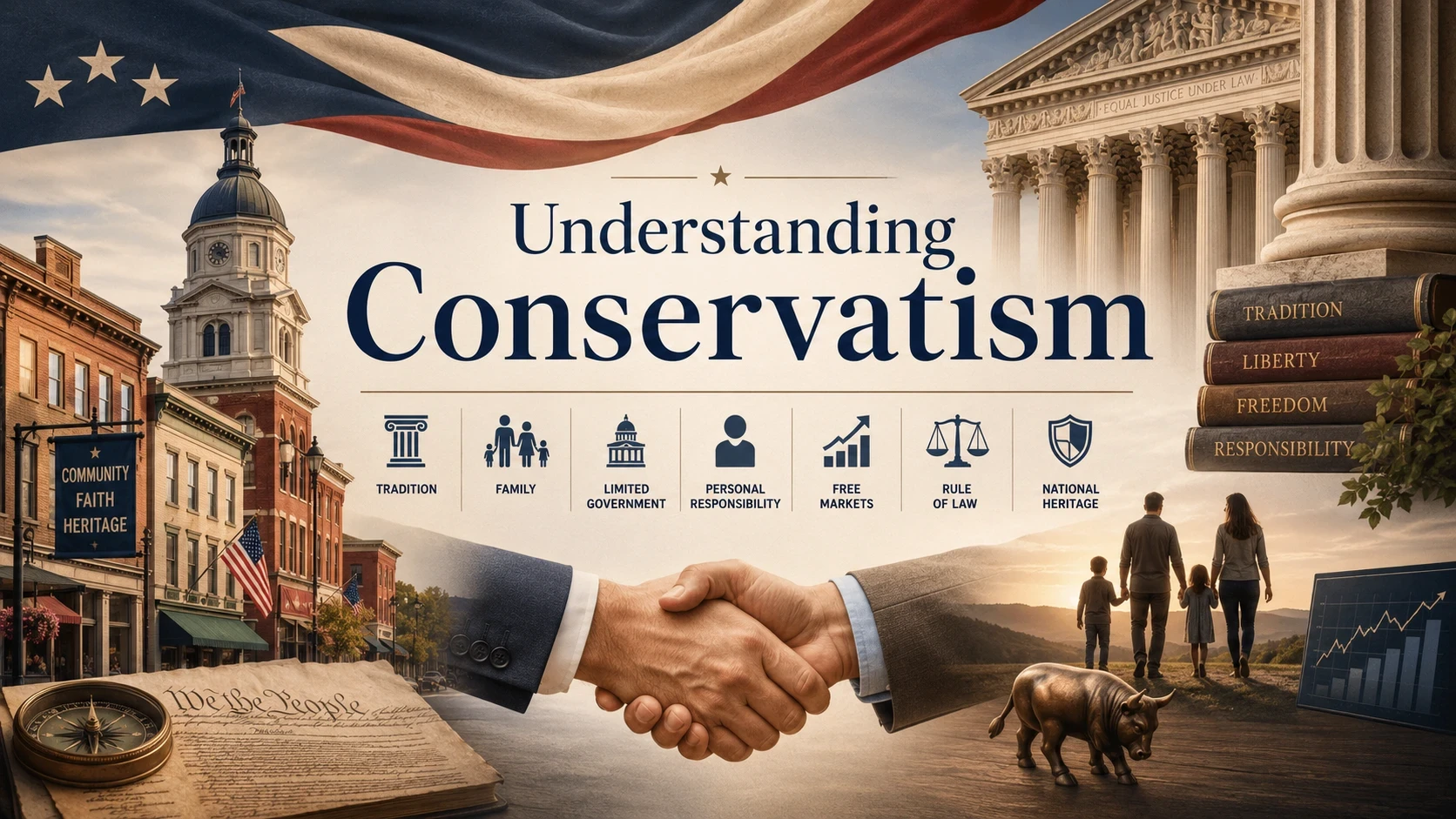
 Conservatism can be seen as a call to cherish the traditions that keep society grounded. It’s not just about resisting change or sticking to the past—it’s a belief in the value of stability and continuity. By valuing institutions and practices that have stood the test of time, conservatism offers a framework that keeps societies steady, especially when faced with uncertainty.
Historically, conservatism traces back to strong roots that began intertwining in response to rapid shifts in the political landscapes across Europe. Think about the French Revolution—an event that quite literally shook old regimes to their core. Out of these tumultuous times, conservatism emerged as a defender of existing social orders and structures.
Today’s world might be different, but the heartbeat of conservatism remains the same. In the modern global arena, conservative movements adapt but still hold on to those age-old values that emphasize tradition, order, and often a sprinkle of nationalism, depending on where you are.
Every nation brings its own flavor to conservatism, adding unique colors to the ideological palette. The United States sees its conservative values wrapped closely with the Constitution, while in the UK, there’s a marked focus on royal traditions and parliamentary structures. Across the world, whether it’s Australia or a European nation, you’ll find threads of conservatism shaped by local history and cultural nuances.
Core Tenets of Conservatism: Principles that Guide
At the heart of conservatism lies a deep respect for tradition and social stability. For many conservatives, the past isn’t just a bunch of old stories; it serves as a guidebook, offering time-tested solutions and lessons that have withstood generations. Traditions provide a comforting continuity that gives people a sense of identity and belonging.
Conservatives often champion the idea of limited government. The thought here is that when the government is less involved, people have more freedom to make decisions for themselves. It’s about striking a balance where enough structure exists to maintain order, but without stifling personal freedoms or economic enterprise.
Individual responsibility is another pivotal concept. The belief is that society functions best when individuals are accountable for their actions. Whether it’s succeeding in business, contributing to community welfare, or upholding moral values, conservatives often stress personal accountability as the cornerstone of a just society.
Morality and ethics walk hand in hand with traditional values in conservativism. There’s often an emphasis on maintaining moral standards derived from cultural norms, religious beliefs, or both. This aspect is seen in various policies and social attitudes that aim to preserve what is perceived as timeless ethical principles.
These guiding principles create a framework within which conservatives operate. They provide a lens through which policies are crafted, ensuring that society remains tethered to its roots even as it adapts to modern challenges. In doing so, conservativism seeks to offer a stable path forward, blending the wisdom of the past with present realities.
Conservatism in Practice: Political and Economic Perspectives
When it comes to governing, conservatism often places emphasis on reducing bureaucratic red tape. This approach tends to encourage a political environment where individuals, businesses, and communities have more room to maneuver and make decisions, potentially fostering innovation and economic growth.
Conservatives typically favor policies that involve tax cuts and deregulation. The idea is pretty straightforward: by lessening the tax burden on individuals and businesses, there’s room for economic expansion, job creation, and increased investments. It’s all about creating a fertile ground for free-market forces to thrive and push the economy forward.
Across the world, different governments exhibit varying shades of conservative policies. In some places, this might mean a focus on privatizing certain sectors traditionally run by the state, such as healthcare or education, while others might prioritize national defense and security due to regional considerations.
There’s a long history of conservative leadership impacting global politics. From Ronald Reagan in the U.S., known for his supply-side economics, to Margaret Thatcher in the UK and her market-driven reforms, conservatism has a track record that has left a lasting imprint on social and economic policies worldwide.
Analyzing the outcomes of these policies gives insights into how conservatism shapes societies. While some praise the economic vitality often associated with conservative governance, others critique it for not addressing social inequalities enough. These debates highlight the vibrant discussions that conservatism triggers in political arenas around the globe.
Social Conservatism: Cultural and Moral Dimensions of Policy
Social conservatism often centers around maintaining what many see as the cultural bedrock of society. It’s not just rules and laws – it’s about fostering values in areas like family life, education, and community involvement that align with long-held traditions.
A key focus is often placed on family values. For conservatives, the family unit is the core of society, providing stability and nurturing future generations. Policies favoring traditional family structures are common, reflecting a belief in the importance of these units for societal harmony.
Education also finds itself at the heart of social conservatism. There’s a push for educational content that mirrors traditional values and sometimes a call for more parental control over what children learn. This approach aims to ensure that the next generations inherit and uphold these time-tested principles.
Social issues like marriage, abortion, and religious rights often see conservative voices raised. For many conservatives, these areas are approached with moral and ethical considerations in mind, guided by foundational beliefs that meld cultural norms and often religious teachings.
Religious values play a significant role in social conservatism. For many, faith is intertwined with politics, influencing their stance on various policies. This can lead to advocating for laws that align closely with their spiritual beliefs, thereby blending moral values with legislative objectives.
Criticisms and Misconceptions: Understanding the Debate
Conservatism, like any ideology, doesn’t come without its share of critics. A frequent criticism points to its tendency to resist change. Skeptics argue that sticking too tightly to past ideals can sometimes hinder progress, particularly when it comes to social issues and adapting to a rapidly changing global landscape.
Another critique is that conservative economic policies, like tax cuts and deregulation, might boost the economy as a whole but can lead to increased income inequality. People argue that these strategies benefit the wealthy more than the average individual, creating a wider gap between rich and poor.
Not to mention, there’s a perception of conservatism being inflexible. Opponents say this rigidity can prevent the adoption of necessary social policies, especially in areas like healthcare and climate change, where urgent action is needed.
Misconceptions also abound. Many mistakenly think conservatism equates to being anti-progress or against personal freedoms. However, many conservatives would argue that their approach is about managing change thoughtfully, ensuring new policies respect long-standing values and societal foundations.
Diversity within conservatism often gets overlooked. There’s a spectrum of beliefs under the conservative umbrella, from those who advocate for more liberal social stances to staunch traditionalists. This diversity means it’s not always a single-minded or uniform ideology.
Exploring these criticisms and clarifying misconceptions helps in understanding conservatism more fully. By acknowledging the debate and varying perspectives, one can appreciate the nuanced landscape of conservative thought.
The Future of Conservatism: Challenges and Opportunities
As society continues to change at a rapid pace, conservatism faces new challenges but also new opportunities. Technological advancements are reshaping economies, communications, and even politics, demanding a response from conservative thinkers and leaders. It’s not just about holding on to the past now but making sure those cherished traditions can adapt and stay relevant.
Globalization is another critical arena for conservatism. As boundaries blur and cultures interact, conservatives must negotiate a balance between protecting national interests and engaging on the world stage. The tension between national sovereignty and global cooperation will undoubtedly shape the future of conservative policies.
The strengths of conservatism lie in its core beliefs of stability and responsibility. These can be powerful tools in addressing future challenges, particularly in economic planning and social policies. Even as new challenges arise, the foundation of conservatism offers a blueprint for maintaining order and continuity.
There’s a growing need to draw young people into the conversation. Future leaders, with their fresh perspectives and insights, can mold conservatism into a force that appeals to newer generations while preserving its essence. Engaging with youth doesn’t mean abandoning core values—it’s about finding ways to meld them with modern expectations and needs.
Ultimately, the future of conservatism will depend on its ability to balance traditional values with the demands of an ever-evolving world. By harnessing its principles to offer practical solutions for modern issues, conservatism can continue to be a relevant and influential force in shaping the societies of tomorrow.