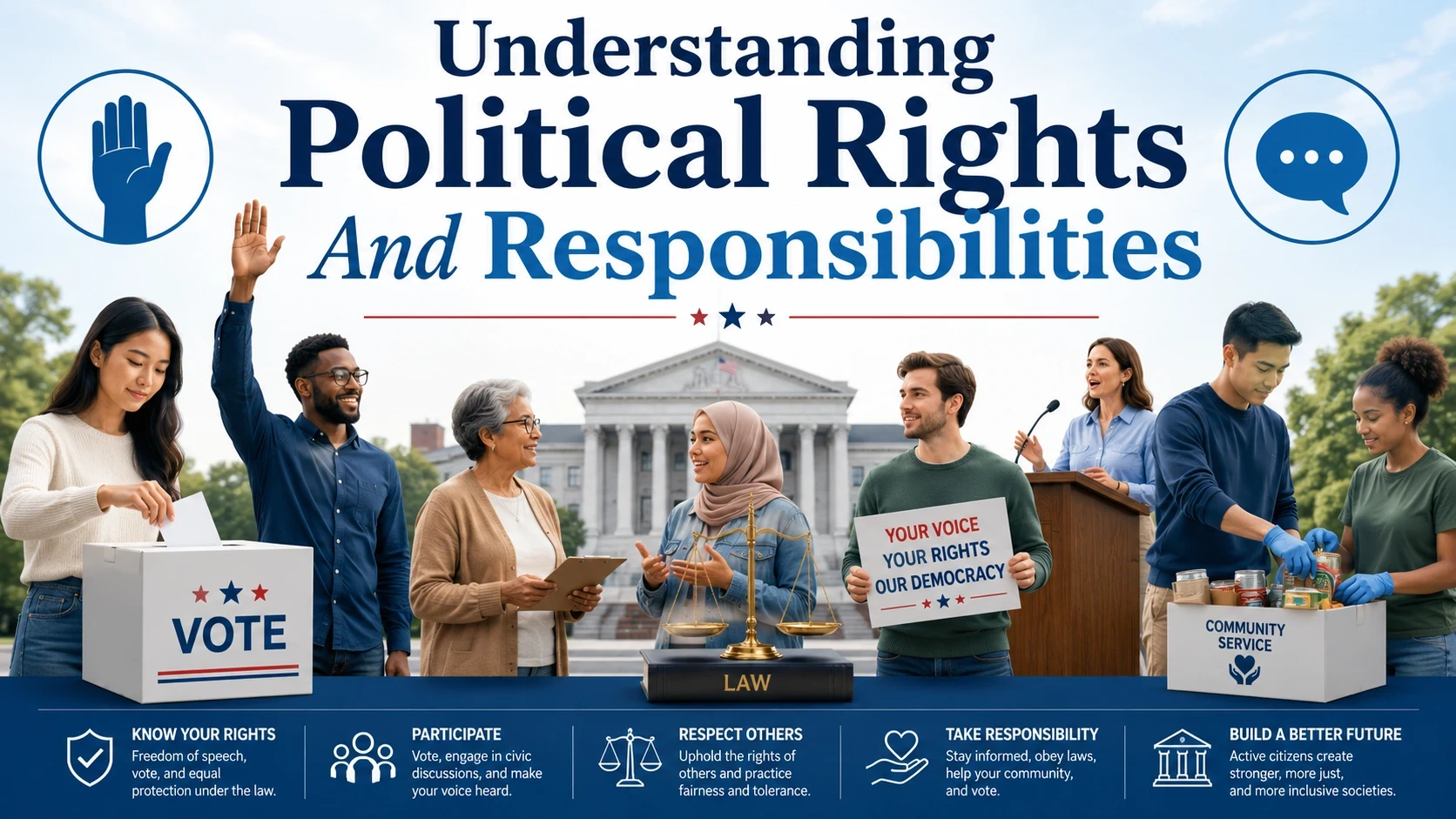
 Political rights and responsibilities form the backbone of any functioning democracy. Understanding these concepts isn’t just for political science majors; it’s crucial for anyone who wants to engage actively in their society. So what are political rights and responsibilities? Think of them as the tools and duties that allow you to influence and be a part of the government and its rules. Political rights include your right to vote, express your opinions freely, gather with others to voice concerns, and participate in government. Responsibilities, on the other hand, are actions like voting and staying informed. These rights and duties ensure your voice counts in shaping the society you live in.
Political rights and responsibilities haven’t been around forever, and their evolution is closely tied to the fight for democracy and equal participation for all. From ancient civilizations granting limited rights to tiny groups to the broader rights enjoyed today, it’s clear the journey has been significant and often hard-won. This evolution highlights the importance of safeguarding these rights and fulfilling our responsibilities as active community members.
In a society where everyone respects political rights and fulfills their responsibilities, democracy thrives. It ensures that governments remain accountable, transparent, and responsive to their citizens’ needs. By understanding and exercising your political rights and responsibilities, you’re not just watching from the sidelines — you’re actively shaping the rules and systems that affect your everyday life. Whether it’s voting in an election, speaking out on issues that matter to you, or educating yourself on political processes, your participation counts.
Key Political Rights You Should Know About
Let’s dig into the political rights that really make a difference. First up, voting rights. Imagine a world where you have no say in who leads and makes laws. Voting rights are about changing that picture, giving everyone the power to choose leaders. It’s pretty much the bedrock of democracy. When you cast your vote, you’re saying what kind of future you envision. And hey, every vote counts more than you might think!
Freedom of speech is like the air we breathe in a democracy. It allows you to share your thoughts without fear. Got an idea, an opinion, or even a criticism? This right means you can express it. Remember, it’s not just about talking but listening too. Through healthy debate and discussions we all grow, and society becomes more robust.
Ever thought about attending a protest or a rally? The right to assembly is your ticket to gathering with others who share your views. This isn’t just about attending a rock concert (though that’s a bonus); it’s a way to push for change, highlight issues, and increase awareness.
Engagement in the government goes beyond voting and the occasional protest. You’ve got the right to run for office, work in public service, and even challenge unjust laws through petitions. It’s all about being in the driver’s seat or even helping steer the vehicle by playing a role in its operations.
Understanding these rights is crucial if you want to get proactive in your community. These aren’t just points on a list but powerful tools for shaping society. Equipped with this knowledge, you’re ready to engage more deeply with what’s happening around you.
Remember, rights in a democracy come with responsibilities. Exercise them wisely and frequently to uphold the spirit of a thriving democratic society.
Responsibilities of Citizens in a Democracy
Citizenship isn’t just about having rights; it’s about carrying out responsibilities that support the framework of a democratic society. Probably the most talked-about responsibility is the duty to vote. Elections shape everything from local policies to national laws, so skipping your vote means skipping a say in your future. Go figure!
Beyond ticking a box on Election Day, staying informed about political happenings is key. Read up on policies, understand where your representatives stand on issues, and don’t just nod along because someone told you to believe something. Being informed means you can make decisions that truly reflect your values and beliefs.
Civic duties might not top anyone’s list when planning out their week, but engaging in them makes a huge difference. Whether it’s participating in community service, joining local boards, or attending town halls, these actions help ensure that your community’s voice is heard and needs are met.
It’s not just about yourself. A strong democracy thrives on the respect of others’ rights. All voices deserve to be heard — even those you might not agree with. Engaging respectfully and listening to different perspectives fosters a more inclusive and understanding environment.
Recognizing these duties isn’t just beneficial for democracy, but for personal growth too. Stepping up to these responsibilities builds a richer, more engaged community and can lead to personal insights and societal advancements. Staying active, informed, and considerate is how citizens power their democracy.
How Political Rights Shape Government and Society
Political rights are like the compass guiding how society and government interact. They’re not just about what you can do or say, but about creating a balance of power between you and those in power. When exercised well, these rights set up checks and balances that keep leaders accountable and transparent.
Think about the way voting rights directly impact who’s in charge. Elections bring change or continuity in leadership and policies. When citizens vote, it sends a message loud and clear about their expectations and priorities. This accountability ensures that elected representatives reflect the will of the people, addressing concerns that matter most to the community.
Beyond voting, the freedom to express thoughts and gather publicly plays a key role in driving social progress. It gives room for innovation, new ideas, and reforms. Policies influenced by popular opinion often lead to social improvements—be it rights for marginalized groups, environmental policies, or economic changes.
In pushing for transparency, these rights help curb corruption. When governments know they’re being watched closely by an informed and vocal citizenry, they’re more likely to act with integrity. This open environment not only prevents misuse of power but encourages fairer practices.
Political rights, when effectively utilized, become the backbone of societal evolution. They empower individuals to push for progress, ensure that leaders remain accountable, and keep the democratic process thriving. With these rights, each individual holds the power to contribute to the collective shape and future of their society.
Challenges and Barriers to Exercising Political Rights
Exercising political rights can sometimes feel like an uphill battle. One major hurdle is voter suppression, where some practices blatantly or subtly discourage people from voting. This can be anything from strict ID laws to limited voting times. The fallout? Many voices go unheard, skewing the results of elections.
Electoral fraud is another concern that can make citizens doubt the fairness of the process. When elections are tampered with, the trust in democratic systems takes a hit. Ensuring all votes are counted fairly is crucial to maintaining the integrity of electoral processes.
Media influence and misinformation often cloud what’s real and what’s not. In a world where information is at our fingertips, it’s easy to get lost in a sea of fake news and biased reporting. This distorts public perception and may discourage people from participating in political discussions or casting informed votes.
Legal and systemic barriers also play a role in keeping some groups from exercising their rights. Whether it’s gerrymandering districts to favor one party or laws that don’t cater to all demographics, these obstacles can heavily impact political engagement and representation.
For many minority groups, representation is a huge issue. Quite often, minority interests are sidelined due to a lack of representation in political spheres. This can discourage participation, with people feeling their issues won’t be addressed regardless of their vote.
Overcoming these challenges often requires a collective effort. Advocating for fair voting practices, demanding truthful media reporting, and challenging unjust systems are steps society can take to ensure political rights are accessible and exercised by everyone.
Empowering Individuals: Ensuring Political Rights and Responsibilities are Respected
Empowering individuals to fully exercise their political rights starts with education. It’s vital for people to understand their rights and responsibilities to make an impact. Education doesn’t have to be formal. It can be as simple as community workshops, online courses, or even local discussion forums.
Community engagement plays a crucial role in encouraging participation. Grassroots movements often light the spark needed to bring change. These movements give a platform to everyday voices, making sure diverse opinions and ideas come forward in public discourse.
Policy changes can make or break the accessibility of political rights. Advocating for fair policies that remove barriers to voting and representation can ensure that these rights are protected and available for all. Whether it’s lobbying for better voting laws or demanding equal representation, active engagement in policy reform is crucial.
The future of political engagement looks exciting with technology breaking down traditional barriers. From online platforms for voting to digital forums for debate, tech offers innovative ways to participate and stay informed. However, with tech comes the need for digital literacy; understanding the responsible use of digital power is essential.
Empowering individuals is also about encouraging responsibility. With rights come the duty to respect and protect the rights of others. Supporting peer education and mutual respect within communities creates a culture where political rights are not just a privilege but a shared societal duty.
Together, through education, community action, and embracing responsible technology use, individuals can stand up for their rights and encourage a fair and inclusive future for everyone.