
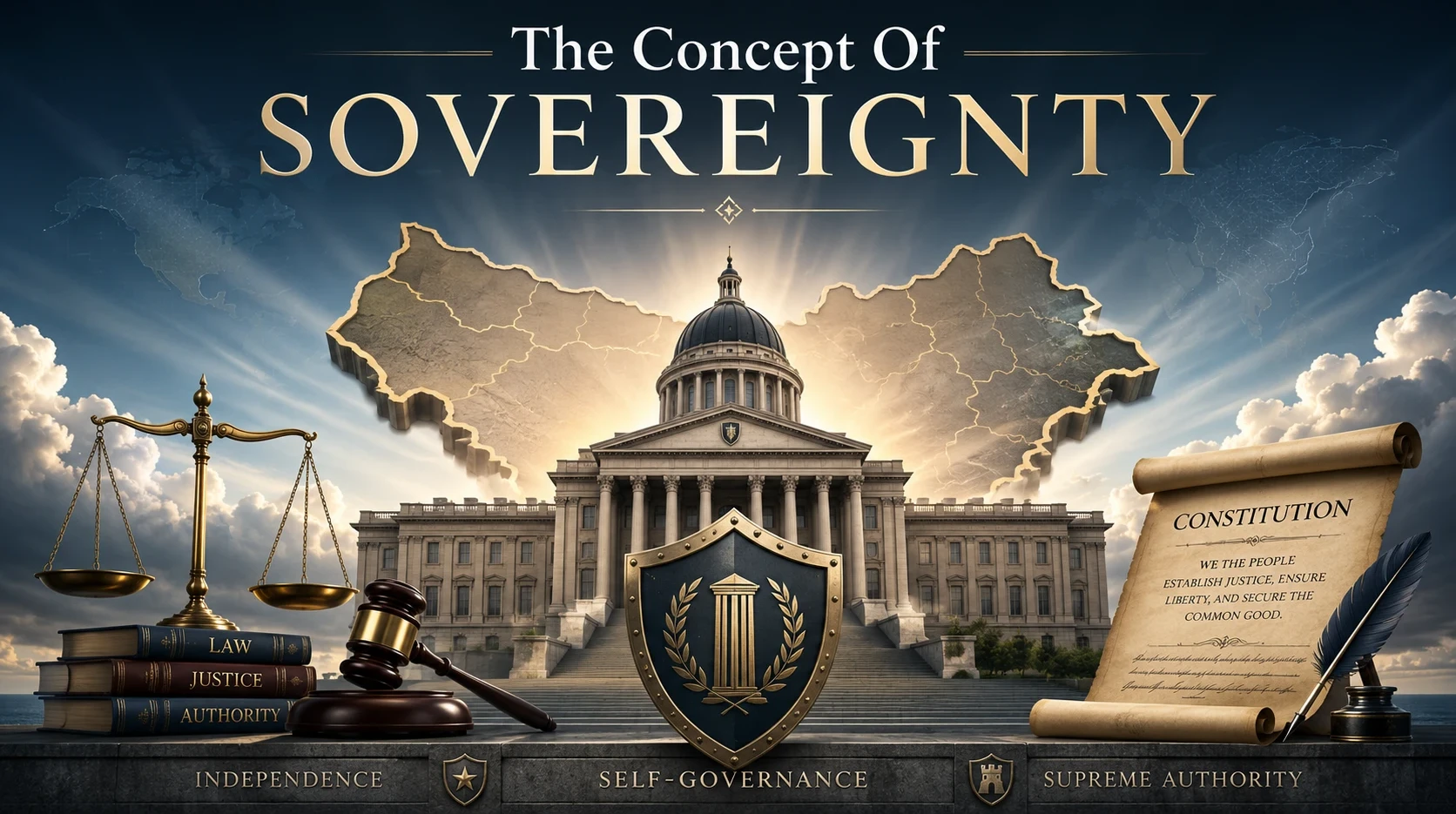
 Sovereignty, at its core, is about the ultimate authority to govern within a territory. It’s like the top dog of political concepts. Nations have huddled around this idea for centuries to assert control and independence.
Jumping back in time, sovereignty wasn’t always as we know it today. The rise of nation-states in the Westphalian era in the 17th century shaped modern thinking. Before, authority was split among empires, kingdoms, and churches. Sovereignty carved up these messy lines into neat boundaries—each nation its own boss.
Events like the Treaty of Westphalia in 1648 marked a turning point, solidifying this neat and tidy concept. The concept evolved through conflicts, treaties, and revolutions. French and American revolutions? Yep, they gave a fresh spin on sovereignty, emphasizing people’s power.
But why should you care about a dusty old concept? Because understanding its roots helps us see why countries guard sovereignty so fiercely today. History gives us context for the tussles over land, power, and people that still rage on.
Look at key moments—like the dissolution of empires after World War I or the creation of the United Nations post-World War II. They left a mark on how sovereignty plays out, setting the stage for modern politics.
In short, tracing back the historical threads of sovereignty helps unravel today’s political fabric. It’s a mix of past lessons and future predictions, showing that even old ideas have staying power in world affairs today.
The Essential Elements of Sovereignty
Getting a grip on sovereignty involves understanding its key elements: authority, autonomy, and territorial integrity. These are like the holy trinity of political control, each playing a crucial role in maintaining a state’s independence.
Authority is the big one; it’s about having the ultimate power to make and enforce laws within a country’s borders. Think of it as the backbone of sovereignty. Without strong authority, a state’s ability to control its own destiny gets shaky.
Next up, autonomy. This one’s about being free from outside interference. It’s what makes a country truly free to operate according to its own rules. This independence is precisely why sovereignty gets folks so fired up—it’s about self-determination.
And then there’s territorial integrity, which ensures the country’s physical boundaries are respected and maintained against external aggression. It’s what maps are for—defining where sovereignty begins and ends. No trespassing, buddy!
Internal versus external sovereignty creates another layer of understanding. Internal sovereignty deals with the state’s power over its citizens and the land. External sovereignty, on the other hand, is about recognition and respect from other nations. Both are necessary to keep a fully functional sovereign state in today’s interconnected world.
Having a clear vision of these elements helps us appreciate the delicate balance of power and independence. It’s a reminder that sovereignty isn’t just a historical relic, but a living concept with real-life consequences.
Sovereignty vs Globalization: A Modern-Day Tension
Globalization and sovereignty often face off like heavyweight champs, each vying for dominance in an increasingly connected world. As nations strive for economic and political strength, they also find themselves entwined with international networks that can challenge their sovereignty.
International organizations like the United Nations or the World Trade Organization often come into play, impacting how countries exercise sovereign power. While these organizations advocate for global cooperation and trade, they also ask nations to give up a slice of their autonomy. It’s a tricky negotiation, balancing participation in a global community while retaining national independence.
For example, global trade agreements often require states to adhere to specific rules or face sanctions, which can feel like handing over a share of their decision-making powers. Yet, participating in these agreements can boost a country’s economy significantly, showing why nations walk this tightrope.
Consider the European Union—often cited as a case of pooled sovereignty. Member countries share governing powers for collective benefits, like free trade and travel, yet this arrangement also sparks debates about lost national control.
These dynamics invite nations to rethink what sovereignty really means. Is it about going it alone or finding a seat at the global table? In essence, the tension between sovereignty and globalization reflects a broader debate on how countries can maintain national character while still being part of a global narrative.
Contemporary Challenges to Sovereignty
Sovereignty today doesn’t just face globalization. It also grapples with other complex challenges that test its traditional boundaries. Supranational unions, like the European Union, redefine what it means to be a sovereign state by pooling resources and decision-making powers for shared benefits. This arrangement sparks lively debates about how much control a country should hand over for the sake of collaboration.
Technology, too, is a game-changer. As digital borders grow fluid, controlling information flow or protecting citizens’ data becomes more complex. Cybersecurity threats are a stark reminder that traditional concepts of territorial defense need rethinking. Nations are pushed to adapt to a digital landscape where sovereignty can easily be compromised at the click of a button.
Climate change presents another layer of complexity, pressing states to reconsider their responsibilities and actions. Environmental challenges don’t stop at borders, calling for international cooperation that can sometimes clash with national interests. The strain of managing these global issues while trying to maintain sovereign authority is real and requires innovative solutions.
All these pressures highlight how dynamic sovereignty has become. They force us to question and redefine traditional practices, aiming to protect the core idea of self-governance in a rapidly changing world. Understanding these challenges helps steer national policies toward resilience and adaptability in a future filled with uncertainties.
Sovereignty in the Face of Human Rights and Intervention
Balancing national sovereignty with human rights issues often leads to prickly international discussions. But in today’s global arena, these are conversations we can’t avoid. One of the main debates centers around humanitarian intervention. When a nation abuses its citizens, does another state have the right—or even the duty—to intervene? This question tests the limits of sovereign privacy versus moral responsibility.
Lately, the international community has leaned toward the Responsibility to Protect (R2P) principle. This doctrine suggests that if a country fails its citizens, outside intervention isn’t just an option but a necessity. It’s a tightrope walk between respecting a nation’s sovereignty and protecting universal human rights.
Conflict zones present another challenge. Sovereignty often squares off against international law in regions torn by war. Here, the exercise of sovereignty can either protect or harm populations, forcing nations and humanitarian bodies to weigh options seriously.
The power of international law nudges in too. While enforcing global norms offers a framework for addressing human rights abuses, it also raises the question of who gets to hold the judge’s gavel. Each move can either fortify global peace or stir up political tensions.
Understanding these dynamics offers a pragmatic lens into how global players can work together—or against each other—to uphold both sovereign rights and human rights. It’s about finding that elusive balance where justice doesn’t play second fiddle to power.
Future Outlook: The Evolution of Sovereignty
Peering into the future, the concept of sovereignty is set for a transformative journey, driven by shifting geopolitical dynamics and technological advancements. As we move ahead, nations must reconsider how sovereignty adapts to the ever-changing global landscape.
One major trend lies in cybersecurity’s increasing relevance. In a digital era where information is as powerful as physical territory, safeguarding cyber borders becomes as critical as protecting land borders. Sovereign states need robust strategies to ward off digital threats while embracing technological innovation to stay competitive.
The geopolitical climate is also in flux, with power shifts among nations reshaping global influence. Economic partnerships, political alliances, and even military pacts continuously rewrite the rules of sovereignty. As emerging powers stake their claims on the global stage, older powers must recalibrate their strategies to maintain relevance.
Reimagining sovereignty involves adapting to these changes without losing the essence of self-governance and national identity. Nations face the challenge of crafting policies that strike a balance between cooperation and control, harnessing both for greater resilience.
In this globalized, digitized world, sovereignty evolves into not just a claim of territory, but a broader interpretation encompassing resources, data, and influence. Understanding this evolution helps nations and their citizens navigate the complex weave of modern international relations, maintaining both independence and global cohesion.