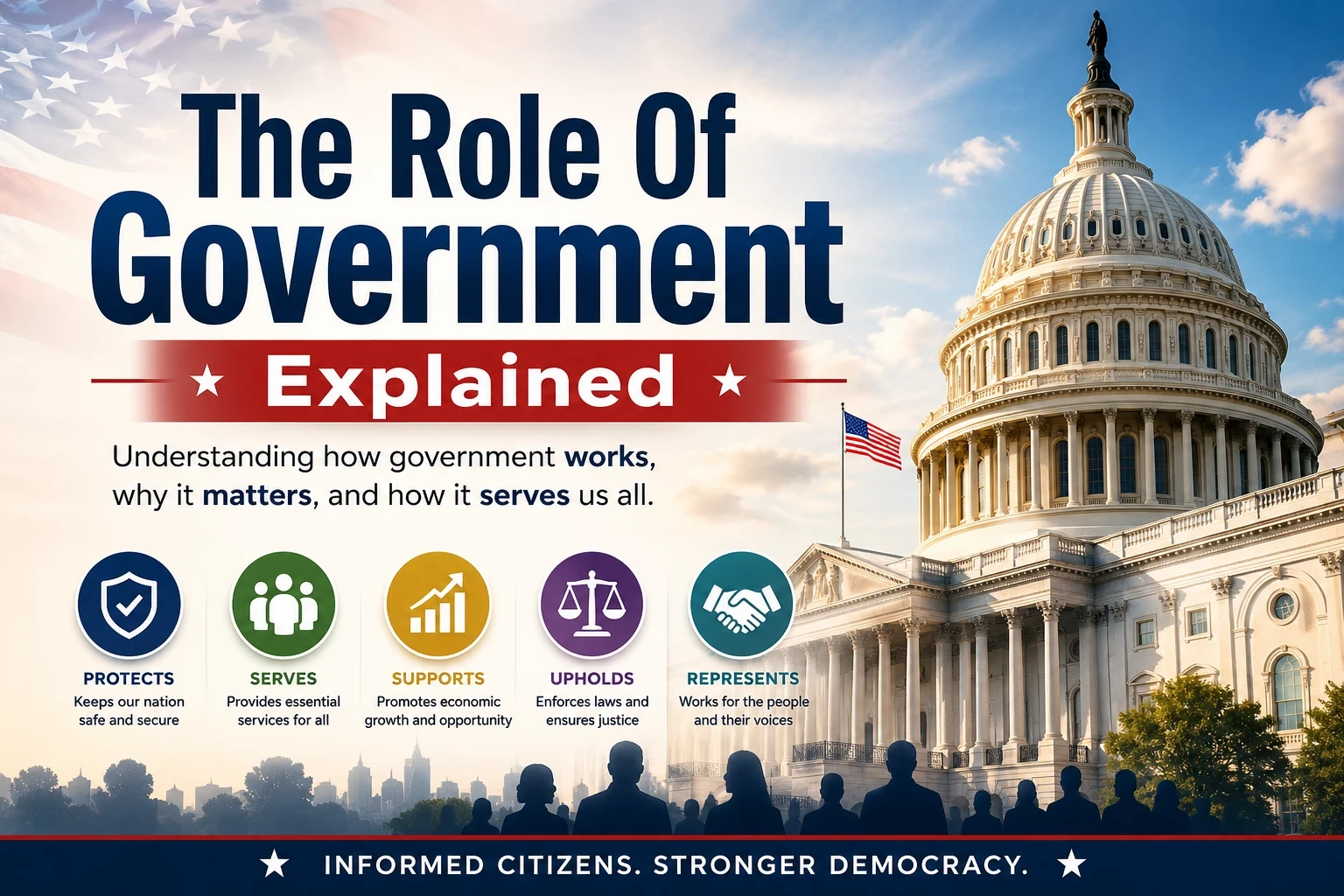
 Governments, these complex and often intimidating structures, are really about one big idea: organizing societies so they run smoothly. Picture that extra force ensuring roads are paved, kids learn in school, and everyone stays safe. But here’s the kicker: beyond the daily grind of laws and policies, governments embody the very fabric of civilization.
If you’ve ever wondered why we’re told about monarchs and emperors in history class, it’s because they’ve shaped our modern governance in a massive way. From ancient city-states to today’s vast federations, governments evolved to adapt to the needs of the times, teaching us how collective decision-making can lead to a fairer, more stable society.
Now, when talking about what roles a government should play, there’s heated debate among scholars. Some folks see government as hands-off referees, keeping things fair. Others see them as proactive problem-solvers in the community. Think of it as a high-stakes tug-of-war where philosophers, economists, and citizens all have a say. This tug-of-war has laid the foundation for how different societies operate today, whether it’s a democracy, autocracy, or something else entirely.
At its heart, government aims to maintain order, secure justice, and promote the general welfare. It’s like the ultimate team leader working to ensure everyone plays nice and has what they need to thrive. Yet, this foundation is ever-shifting as history and new ideas continuously redefine what ‘government’ truly means.
Ensuring Public Welfare: Governments as Providers of Essential Services
Governments aren’t just about laws and taxes; they’re also the beating heart behind public services that touch our daily lives. When you switch on a light, go to a doctor’s appointment, or use public transport, there’s a giant network of people and systems behind the scenes steered by governmental hands.
Why do we lean on the government for these essentials? It’s simple: affordability, accessibility, and quality. Imagine relying on a private company for every bit of school education, healthcare, or road maintenance. Thanks to governments, these services aim to be universal, making sure no one’s left out due to financial constraints.
Public welfare programs especially shine here. Ever thought about what keeps food on the table for those who hit hard times? Safety nets like unemployment benefits, food assistance, and subsidized housing all come into play here. They’re like lifelines ensuring everyone gets a fair shot, even when life throws curveballs.
Governments must also be the referees when it comes to balancing personal freedoms with societal safety. Wearing seatbelts, getting vaccinations—it’s about choosing the public good, even if it means following some rules.
Every country might have its unique way of doing things, but underlying it all is an unspoken promise: striving to make life better, safer, and more equal for everyone. It’s this shared vision that pushes governments to constantly improve how they deliver these services, leveraging technology, policy shifts, and sometimes pure grit.
Protecting the Nation: The Government’s Role in National Security
When it comes to keeping a nation safe, governments have a tall order. National security isn’t just about soldiers and battles; it’s become a multi-layered mission involving savvy computers to spot bad guys long before they come knocking. Sure, the military is still vital, but today’s threats also hide behind computers, affecting economies and infrastructures.
In the past, countries worried mostly about physical borders. Now, governments need to stretch their resources to cyberspace, protecting critical online systems. From hacker attacks to misinformation campaigns, the digital age demands a whole new playbook.
Thankfully, governments don’t go it alone. International ties mean team-ups with other countries to tackle global problems. Remember those high-profile summits? They aren’t just for powerful photo ops. They’re breeding grounds for agreements on shared security interests, ensuring a collective defense.
Mix in intelligence services, and you’re talking about one of the most intricate web of activities dedicated to safeguarding national interests. Analysts and agents work tirelessly to predict and prevent possible disasters, be they terrorist plots or threats lurking in online shadows.
Being a citizen today means understanding that safety isn’t a given—it’s continually being negotiated, adjusted, and reinforced. Trusting a government’s capacity to protect while respecting civil liberties can be tricky. It’s a delicate balance of maintaining openness in society while shielding it from emerging threats.
The bottom line: a well-rounded security strategy ensures peace keeping doesn’t just stay in the realm of military might but embraces technology, diplomacy, and citizen collaboration. After all, a safe nation is not built solely by those with badges and uniforms but by every layer of society working together.
Facilitating Economic Stability and Growth: Government as Regulator and Facilitator
Ensuring a country’s economic engine runs smoothly requires careful tuning by governments. It’s akin to being both mechanic and race strategist, tweaking policies so businesses and people aren’t just getting by but thriving.
Government economic policies are all about setting the stage for success. Fiscal policy, with its taxes and spending, serves as a critical tool for adjusting the speed of economic growth. Lower taxes can mean more money in your pocket, while increased spending might inject needed cash into public projects—jobs, anyone?
Monetary policy is where the central banks step in, managing interest rates and money supply to keep inflation in check. Even as an everyday person, these choices ripple through your life when it comes to loans, savings, and prices in the shops.
Trade policies might not sound like they affect you, but think about all those “Made in” labels. Tariffs and trade agreements affect what you pay for a smartphone or the steak on your plate. The right trade policy opens markets and nurtures local industries.
Regulation extends beyond just keeping businesses honest. It’s about crafting a landscape where innovation can flourish. Whether it’s tech startups challenging the status quo or traditional industries hustling to keep up, balanced regulations ensure the playing field remains fair.
And let’s not forget the role of governments in sparking entrepreneurship. Providing grants, startup incubators, and easing access to credit can turn a simple idea sketched on a napkin into a booming business.
Ultimately, governments act as a guiding hand in the economy, stepping in when markets stumble and stepping back to let competition thrive. Citizens, entrepreneurs, and policymakers all have parts to play in this shared economic journey.
Representation and Democracy: Government as the Voice of the People
For a government to reflect its people’s hopes and dreams, representation is key. In democracies, this means that everyone’s got a say, not just the loudest or the richest. Think of it as a large family meeting where everyone’s opinions matter, and where voting becomes the ultimate clap of approval or disapproval.
Elections are the showpiece of democracy, and they’re not just about winning. They’re a chance for everyone to express how they feel about their leaders and the direction their country is headed. Fair and transparent elections mean trust, and trust is what keeps the democratic machine humming.
But representation goes beyond just showing up at polling stations. It includes having a government that’s transparent in its actions and decisions. Citizens need to hold their leaders accountable, ensuring promises don’t evaporate after the ballots are counted. Think of it like a contract equally signed with public trust as the ink.
Public participation isn’t just a buzzword; it’s citizens engaging in policy-making processes. Whether it’s through forums, online debates, or town hall meetings, this engagement keeps governments tethered to reality.
Having checks and balances isn’t just fancy talk in political textbooks. It’s the lifeblood of democracy, ensuring power isn’t hoarded and that diverse opinions come together to shape policies.
At its core, a government’s legitimacy springs from the public’s trust and active participation. Democratizing the decision-making process calls for citizens to be active players, speaking up, voting wisely, and nurturing a culture of open dialogue. This ensures that governments remain true representatives of the people they serve.
Challenges and Opportunities: Adapting the Role of Government in the 21st Century
The world doesn’t stay still, and neither can governments. Tackling modern challenges means governments need to be as dynamic as the issues they face. A biggie? Tech is rewriting the rulebook. Digital governance isn’t the future—it’s now. From e-governance platforms letting folks access services from their phones to AI crunching data for better policymaking, tech’s pushing the boundaries every day.
Climate change is another pressing challenge screaming for attention. Crafting policies that aren’t just reactive but proactive is mission-critical. This means thinking green in every policy, from energy to transport, ensuring sustainability isn’t a buzzword but a baseline requirement.
Public health is another front line. Policies have to be nimble, learning from past pandemics and adapting quickly to new health threats. Those in charge need to focus heavily on research, robustness, and resilience, ensuring preparedness is more than just a Playbook chapter.
Inequality is getting harder to ignore—financial, social, educational. Governments need to work on crafting policies that level the playing field, not just with words but real action. Redistributing wealth, offering equal opportunities, and ensuring inclusive growth is key.
In grappling with these issues, governments also have opportunities to redefine their relationship with the people. Building trust through transparency, listening actively, and responding with intention allows for a partnership, rather than a top-down hierarchy.
The 21st century presents a whirlwind of challenges, but with them comes the chance to innovate and adapt the ways governments operate. Staying anchored in ethical governance while welcoming new ideas will ensure a resilient future, where every challenge is an opportunity to prove what governance truly stands for.