 Political institutions might sound like a complex web of jargon and suits, but they play a real part in shaping our day-to-day lives. These structures include governments, parliaments, and courts. They’re the framework through which societies organize their activities. Think of them as the managers of a country’s affairs, setting rules, enforcing laws, and keeping things in order.
Ever pondered why political institutions are such a big deal? Well, they make decisions that affect everything from what taxes you pay to the kind of education available. And guess what? They do all this with the aim of maintaining balance, justice, and security. They’re there to streamline how power is used, ensuring every voice in the crowd gets a chance to be heard.
These organized bodies aren’t just about sitting and making decisions. They’ve got roles that directly touch our lives, whether we realize it or not. From making big policies about climate change to dealing with healthcare issues, they’re working, ideally, for us, the people. But it’s not all perfect. Their effectiveness is often debated and depends on how transparent and accountable they are.
Recognizing the significance of political institutions goes beyond understanding functions and roles. It’s about how they impact people’s daily lives. You know that sense of security, the freedoms you enjoy, or the social services you’re entitled to? All thanks to these institutions creating a stable environment for society to thrive.
Let’s not swap this understanding with complacency. Staying informed, participating in the dialogue, and being an active part of political life can lead to institutions that are truly about people’s needs. Remember, political institutions exist not in isolation but as a part of society’s fabric. They connect to us, shape us, and are, in turn, shaped by us.
The Historical Evolution of Political Institutions
Where we stand today owes a lot to where we’ve come from. Tracing the history of political institutions reveals a journey that’s loaded with lessons, changes, and adaptation. From the city-states of ancient Greece to modern democratic systems, the evolution is packed with interesting twists.
Back in the days of ancient civilizations like Rome and China, political systems were laying the groundwork for governance that would resonate through the ages. These early systems showcase how society began organizing itself formally, introducing roles like leaders, magistrates, and councils – some of the fundamental models modern politics is built upon.
Fast forward to the medieval times, where monarchies ruled and the church played a key role in governance. These systems showcased power consolidation, which was challenged and changed over time through revolutions and reforms. The shift during the Enlightenment paved the way for modern governance ideas like separation of powers.
The birth of democratic ideals in the 18th and 19th centuries marked a huge shift. Think of movements like the American and French Revolutions, which pushed boundaries for freedom and rights. The framework of democracy began to take solid shape here, introducing principles like equality and popular sovereignty that many institutions build upon today.
Beyond the politics of power and rule, the evolution of these institutions often reflects societal priorities. Changing views on equality, rights, and justice have pushed institutions to adapt, leading to better representation and more inclusive governance models.
History helps us understand that political institutions are not static; they’re living systems. By grasping this incredible journey, we’re better equipped to appreciate the value of political progress and the need for continued evolution to meet contemporary challenges.
Types of Political Institutions: Navigating the Complex Web
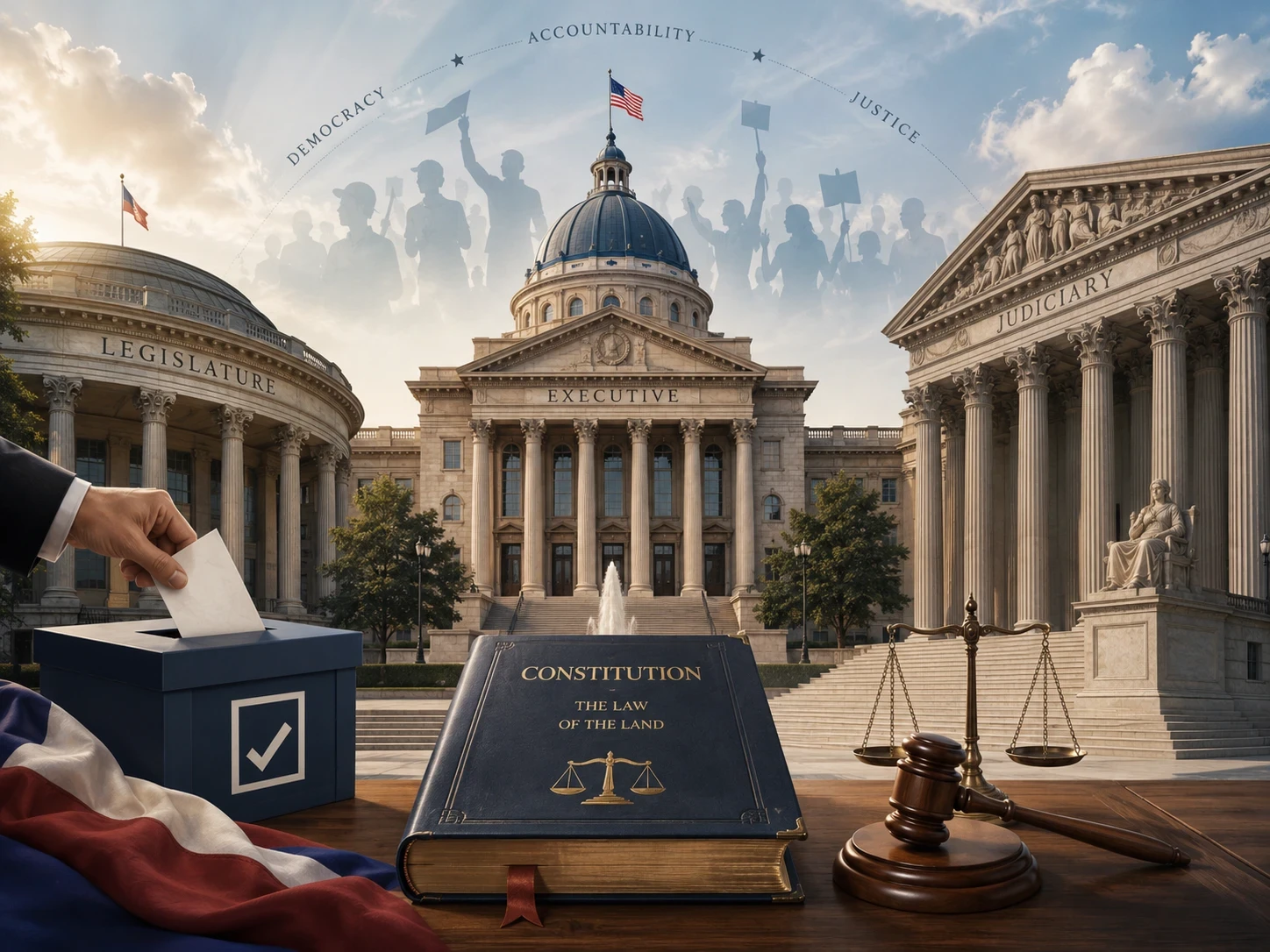
Political institutions might seem like a tangled web of bureaucracy, but breaking them down makes it all clearer. At the heart of any government, you’ll find a few key types: executive, legislative, and judicial branches. They’re the building blocks, each with its unique function to keep the wheels turning smoothly.
The executive branch, often personified by a president or prime minister, handles the running of the state. They’re the face of the country in international arenas and the enforcers of laws at home. Their role involves leadership, management, and implementation of laws set out by another important player: the legislative branch.
Now, picture lawmakers intensely debating policies. That’s the business of the legislative branch. They’re all about creating laws, representing the electorate, and checking the executive power. It’s where ideas turn into rules that shape how societies function.
Over in the judiciary, you’ve got judges and courts interpreting the laws. This branch steps in to resolve conflicts and ensure that laws comply with a country’s constitution. It’s the guardian of justice, ensuring fairness in how rules are applied, protecting citizens’ rights, and maintaining order.
Then there’s how all these gears fit together: differently based on governance models. Countries opt for systems like federal states, where power is shared between national and state governments—think the U.S. Others, like France, go for a unitary system, centralizing power. Understanding these variations helps appreciate how local contexts shape governance.
Consider real-world examples. The U.K.’s parliamentary system differs greatly from the U.S.’s presidential system. Each setup influences decision-making processes and how responsive a government is to its people. Exploring different countries’ governance can offer fresh insights into how political institutions adapt to serve their citizens best.
The Role and Functionality of Political Institutions
Political institutions aren’t just about making rules. They’re the safety net ensuring fair play in how society runs. The concept of checks and balances comes into play here, ensuring that no single branch of government can overpower the other two. This system works like a referee in a game, keeping the action fair and the players honest.
In the world of political decision-making, these institutions help forge a path for creating policies that impact daily lives. From education reforms to health care policies, the intricate processes they follow encourage transparency. If done right, this boosts public trust, ensuring decisions reflect people’s needs.
Political institutions are ever-evolving. Institutional reforms reflect ongoing efforts to align them better with current societal issues. Reforms might aim to enhance democracy, reduce corruption, or improve efficiency, driven by the need to make these institutions more responsive and accountable.
Consider the role political institutions play in addressing global challenges like climate change. By creating frameworks for action, they can facilitate international cooperation. This kind of action shows how institutions can transcend local issues, tackling broader concerns that affect the planet’s future.
Reforms are crucial, but understanding the protocols within institutions, such as voting systems and debate structures, helps us engage more effectively with them. Being informed empowers individuals to push for improvements and advocate for change. Ultimately, stronger institutions mean a more resilient society.
Challenges Facing Modern Political Institutions
Navigating today’s political landscape isn’t free of hurdles. Corruption remains a persistent shadow over many institutions, eroding trust and impact on governance quality. When those in power prioritize personal gain over public welfare, it spells trouble for democratic integrity and accountability.
Accountability is often compromised, posing a significant threat. It’s crucial for institutions to enhance transparency, implementing mechanisms that hold officials accountable and ensure power is wielded fairly and justly.
The tide of globalization brings opportunities but also challenges for national political institutions. Increased global interconnectedness means policies in one country can quickly ripple across borders, affecting trade, immigration, and even local economies. This necessitates institutions that can think globally while acting locally, balancing international responsibilities with domestic priorities.
Political institutions are also grappling with the emergence of new political movements and ideologies. In recent years, there’s been a surge of grassroots movements seeking to reshape the political landscape, advocating new ideas and methods. While these can invigorate democracies, they can also fracture consensus, challenging traditional institutions to adapt or risk becoming obsolete.
Modern institutions need to be more agile than ever, able to respond to both long-standing and emerging issues swiftly. This often requires fresh thinking, inclusivity, and adaptability. It’s about crafting solutions that honor the past but embrace the future, creating a dynamic platform for progress.
Staying informed and engaged is vital for citizens. By actively participating in political discussions and holding leaders accountable, individuals can contribute to healthier institutions. After all, vibrant democracies thrive on the active involvement of their citizens, pushing for continuous evolution and improvement.
The Future of Political Institutions: Adapting to Change
Political institutions are on the brink of transformation in this fast-paced digital age. Technology has begun to redefine governance, introducing concepts like e-voting and digital transparency. Innovations offer new ways to connect governments with the people, making processes more accessible and efficient.
Addressing climate change remains a towering challenge. As awareness grows, so does the demand for political institutions to incorporate sustainability into their core strategies. The focus on renewable energy policies and sustainable urban planning is gaining momentum, demonstrating that institutions must blend environmental considerations with their political agendas.
Additionally, the rise of the younger generation is shaping the future of political institutions. Young people bring fresh perspectives, values, and expectations that challenge traditional norms. Their active involvement in political processes indicates a shift towards more inclusive and representative governance.
Adapting to these changes isn’t all smooth sailing. Institutions need to balance tradition with innovation, preserving stability while embracing the new. This delicate dance requires openness to reform and a commitment to diversity in decision-making processes, ensuring all voices have a chance to be heard.
By encouraging dialogue and inclusion, political institutions can pave the way for a more adaptive and resilient governance model. This ongoing transformation can lead to systems that are not only more responsive but also better aligned with the diverse needs of modern societies.
Active engagement remains key. Whether it’s through voting, advocacy, or community organizing, individuals have a role in shaping the political landscape. By driving discussions and demanding accountability, people help steer institutions toward a more promising and equitable future.